


What if the serum that promises the most isn’t the one your skin needs? If tightness or flaking persists despite moisturizer, you may be wondering whether moisturizing serums for dry aging skin could make your routine feel more comfortable. Look beyond age-focused claims: the ingredients, finished formula, and way you layer products all matter.
A serum can add water-binding ingredients, such as humectants, but it doesn’t necessarily replace moisturizer. Applying moisturizer afterward can help support a comfortable routine. Choose based on how your skin feels and what you already use, not simply a number on the label.
This guide covers ingredient categories to look for, a practical order for applying products, and how to introduce a serum thoughtfully. You’ll also learn how to pair hydration with barrier-conscious care, so each step has a clear purpose. Keep your choices considered, your layering gentle, and your routine focused on comfort.
Key Takeaways
- Learn why a serum can complement moisturizer but may not be enough on its own when skin feels persistently dry.
- Explore how ingredient categories support hydration, and why the full formula and your skin’s tolerance matter.
- Use your main concern to narrow down moisturizing serums for dry aging skin, rather than relying on age-based claims alone.
- Follow a simple layering sequence: gentle cleanse, serum as directed, moisturizer, then daytime sun protection.
- Introduce products thoughtfully and prioritize comfort and consistency over adding extra steps.
Why Dry, Aging Skin May Need More Than a Moisturizing Serum
If your skin feels tight, looks rough, or makes makeup settle unevenly, it can be frustrating to add a serum and still feel uncomfortable. These experiences aren’t universal, and a serum may support hydration without addressing every reason skin feels dry. A moisturizing serum is a lightweight leave-on formula designed to deliver selected skincare ingredients to the skin.
Think of it as one step, not a complete routine. The American Academy of Dermatology advises applying moisturizer after bathing to help trap water in the skin. This points to a useful distinction: humectants attract water, while occlusive ingredients help reduce water loss from the skin’s surface. A serum may provide humectants, but it doesn’t automatically replace moisturizer.
How skin needs can change with age
Dryness, sensitivity, or changes in texture may become more noticeable over time, but they aren’t inevitable. Age alone doesn’t determine which serum will suit you. Skin can respond to several influences, including the surrounding environment, daily habits, and individual biology. Consider what you’re experiencing now rather than choosing a formula based only on an age label. The goal is a routine that feels comfortable for your skin.
What a hydrating serum can and cannot do
Water-attracting ingredients, known as humectants, can support a hydrated feel when used as directed. Hyaluronic acid is one familiar example; Hyaluronic acid describes its water-binding properties. But an ingredient name alone can’t tell you how a finished serum will feel or perform. The overall formula, how you apply it, and what you layer afterward all matter.
That’s why moisturizing serums for dry aging skin are best considered alongside a moisturizer, rather than as a standalone fix. If a serum leaves skin feeling comfortable, it may be a useful hydration step. If dryness persists, consider the routine as a whole. A serum can support hydration, but it shouldn’t be expected to dramatically reverse visible signs of aging. Choose for comfort and tolerance, then give a simple routine time to become consistent.
Which Moisturizing Serum Ingredients Support Dry, Mature Skin?
Start with function, not a “best ingredient” claim. Skin needs vary, and a highlighted ingredient can’t tell you everything about how a serum will feel or suit your routine. As MedlinePlus explains in its overview of changes in aging skin, skin may become thinner and less elastic with age, but those changes don’t determine which formula is right for you.
A humectant attracts water and helps keep it available in the outer skin layers. Hyaluronic acid is one familiar example, with water-binding properties described in this overview of hyaluronic acid. Glycerin is another common humectant. Their presence alone doesn’t guarantee a particular result. The finished formula, how you apply it, and your skin’s tolerance all matter.
Humectants: hyaluronic acid and glycerin
Humectants can support a hydrated feel, especially as part of a routine that includes moisturizer. Some formulas may feel light; others may feel tackier or more substantial. There’s no single required percentage or universal choice for dry, mature skin. Check the full ingredient list and consider whether the texture is comfortable enough to use consistently.
Supporting comfort with barrier-conscious ingredients
Ceramides and panthenol are other ingredients you may find in formulas intended to support skin comfort. Their presence doesn’t ensure a specific outcome, so consider the whole formula and how your skin responds. A moisturizer can complement a serum by adding a more substantial layer to your routine. If irritation persists, simplify your products and seek advice from a qualified medical professional.
- Hyaluronic acid or glycerin: humectants that attract and help retain water.
- Ceramides: ingredients associated with supporting the skin barrier.
- Panthenol: an ingredient to consider in formulas designed with skin comfort in mind.
Use this list as a label-reading guide, not a checklist every serum must meet. For moisturizing serums for dry aging skin, choose according to your main concern and how the finished formula feels, rather than relying on age-focused marketing or a single ingredient name. Explore the available serum options as one step in a considered routine, and check product details for ingredients before choosing.
How to Choose a Moisturizing Serum for Your Dry-Skin Concerns
Choose based on how your skin feels and what your routine can comfortably support, not on an age claim alone. Tightness after cleansing may be temporary or related to your cleansing routine; ongoing flaking or roughness may call for more than a lightweight serum. These observations can guide product choices, but they aren’t a diagnosis.
The National Institute on Aging’s Skin Care and Aging guidance highlights moisturizer as part of caring for dry skin. Use the guide below to identify what to investigate, then check the product directions and full ingredient list.
| What you notice | What to explore | Question to ask |
|---|---|---|
| Tightness after cleansing | Gentle, hydration-focused formulas with humectants such as glycerin or hyaluronic acid | Could my cleanser or cleansing habits be contributing to that tight feeling? |
| Flaking or roughness | A serum that fits your tolerance, paired with a moisturizer | Will this routine add comfort without layering several active products? |
| Skin that feels easily unsettled | A simpler formula with fewer unfamiliar ingredients | Can I introduce this without changing several products at once? |
| Dehydrated-feeling skin | A lightweight or gel-like hydration formula, if comfortable | Does the formula leave my skin feeling comfortable after application? |
Match the formula to how your skin feels
Dehydrated-feeling skin may seem temporarily tight or less supple, while persistent dryness can involve ongoing roughness or flaking. These sensations can overlap, so treat them as clues, not firm categories. A lightweight or gel-like serum may suit someone who prefers a less substantial feel; a richer serum may feel more comfortable to someone who wants a cushioned texture. Texture varies by formula and doesn’t guarantee a particular result.
If tightness follows cleansing, review both the cleanser and the serum. If flaking persists, consider pairing a suitable serum with moisturizer rather than adding more actives. If your skin feels sensitive, introduce one unfamiliar product at a time. Ingredient lists can help you avoid substances you already know you don’t tolerate, but they can’t predict individual tolerance with certainty.
Read labels without getting distracted by age claims
Look for ingredient names and directions, and note whether a formula contains fragrance or another ingredient you personally avoid. Don’t assume that a product labeled for mature skin is automatically a better match. The best fit aligns with your concern, feels comfortable, and works within your routine. If dryness or irritation persists, consider seeking advice from a qualified medical professional.
How to Apply a Moisturizing Serum in a Simple Routine
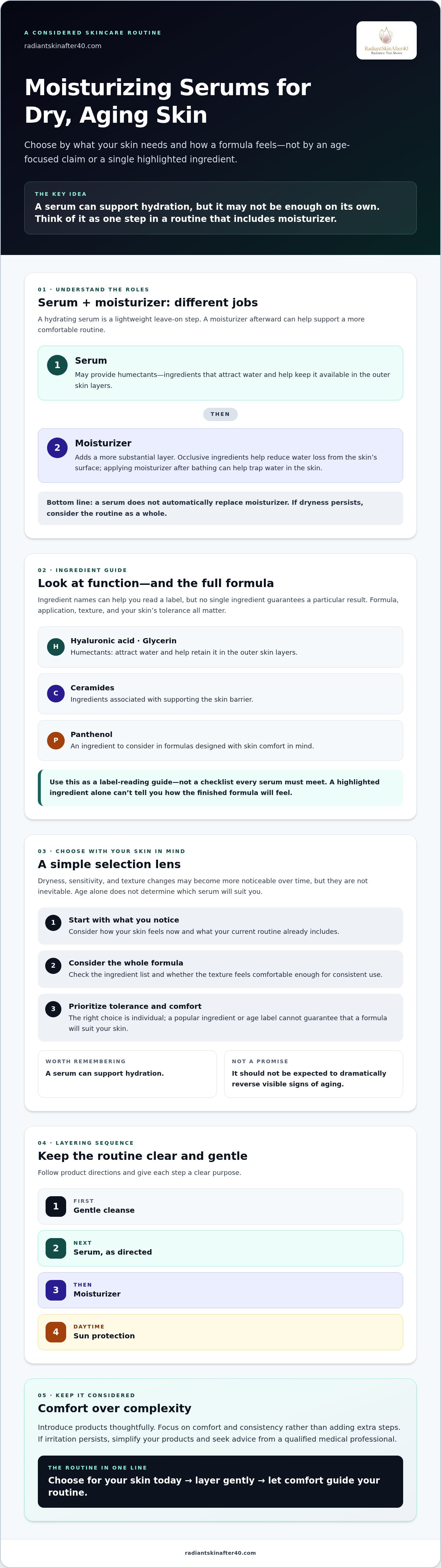
Keep the sequence calm and uncomplicated. Moisturizing serums for dry aging skin are one part of a routine that may also include moisturizer and daytime sun protection. The exact order can depend on a product’s texture and directions, so use the label as your guide rather than assuming every serum is applied in the same way.
Layer serum with moisturizer and daytime protection
A practical starting sequence is:
- Cleanse gently. Avoid cleansing habits that leave your skin feeling stripped.
- Apply serum as directed. Some formulas may be suitable for slightly damp skin, while others have different directions. Check the label.
- Follow with moisturizer. A serum and moisturizer serve different roles and can be used together.
- Protect skin during the day. Use broad-spectrum sun protection and follow its directions; shade and protective clothing can also help limit sun exposure.
For more on the role of moisturizer in a comfortable routine, see this hydrating moisturizer guide. If you’re adding an unfamiliar serum, introduce one new product at a time so it’s easier to notice how your skin responds. The American Academy of Dermatology recommends testing a new skincare product on a small area of skin twice daily for seven to 10 days before applying it more widely. Follow its product testing guidance and the product label.
Adjust gently if dryness or irritation continues
If a new product causes a concerning reaction, stop using it rather than layering on additional products to counteract the discomfort. Keep the rest of your routine simple while you assess what changed. Persistent irritation, or symptoms that are painful or worsening, deserve guidance from a qualified medical professional. A thoughtful routine isn’t about adding more steps; it’s about finding a sequence your skin can tolerate.
Consistency starts with products that fit your routine and feel comfortable to use. If you’re ready to consider a serum for this step, explore the available serums and review each product’s directions and ingredient details before choosing.
Make Serum Selection Part of a Considered Skincare Routine
A useful choice begins with your skin’s current needs, not the number of products on your shelf. For moisturizing serums for dry aging skin, use a simple sequence: identify your main concern, review the ingredient list and directions, assess your skin’s tolerance, then decide how the serum fits with moisturizer and the rest of your routine.
Build a routine around comfort and consistency
Keep your routine steady enough to notice whether products feel comfortable together, but don’t expect a fixed timeline or identical visible results for everyone. Changing several products at once can make it harder to tell what suits you. Focus on how your skin feels and whether the steps are practical to maintain. For related ideas on caring for changing skin texture, explore this skin texture guide.
A considered routine doesn’t need to be elaborate. Choose a serum that aligns with your concern and preferences, follow its directions, and pair it with a moisturizer if that suits your skin. If discomfort or irritation develops, reassess rather than adding more products in search of a quick fix.
Explore adjacent care without overcomplicating the routine
An LED-mask routine is separate from choosing a moisturizing serum. If you use a device, follow its instructions and check whether the products you plan to apply are compatible with its use. This guide to serums for LED mask treatments may be relevant when device compatibility is part of your routine; it shouldn’t replace the mask manufacturer’s directions.
RadiantSkinAfter40 offers serums and moisturizers, so you can consider these categories as part of a composed skincare routine. Specific ingredients and formulas can vary, so review current product details rather than assuming a serum contains a particular ingredient. For a calm next step, explore the available skincare serums and choose with comfort, tolerance, and your routine in mind.
Build a Routine That Feels Right for Your Skin
Choosing moisturizing serums for dry aging skin starts with your skin’s current needs, not age-based promises. Look for ingredients that suit your hydration goals, but consider the finished formula and your own tolerance. A serum can complement moisturizer, while thoughtful layering and daytime sun protection help keep your routine balanced.
Keep the process simple: identify your main concern, check the label, introduce unfamiliar products gradually, and notice how your skin feels. Comfort and consistency matter more than collecting extra steps. If dryness or irritation persists, seek guidance from a qualified medical professional.
RadiantSkinAfter40 offers serums and moisturizers alongside at-home skincare tools, including an LED Face & Eye Mask. The mask is a separate consideration from serum selection, so follow its directions if you use one. Explore RadiantSkinAfter40 skincare to review the available categories and consider what may fit your routine. A thoughtful approach can make skincare feel more comfortable and considered.
Frequently Asked Questions
What is the best moisturizing serum for dry, aging skin?
There isn’t one best serum for everyone; the right choice depends on your skin’s needs, preferences, and tolerance. For moisturizing serums for dry aging skin, look for hydration-focused ingredients such as glycerin or hyaluronic acid, then assess the full formula and texture. A serum should feel comfortable in your routine, and a moisturizer may still be needed afterward. Check product directions and ingredients rather than relying on age-based claims alone.
Can a moisturizing serum replace moisturizer for dry skin?
Usually, a moisturizing serum shouldn’t be treated as a replacement for moisturizer. Serums and moisturizers can play different roles: a serum may deliver selected ingredients in a lightweight formula, while moisturizer adds a more substantial layer to your routine. If your skin feels dry, try applying moisturizer after serum as directed. The best combination depends on how your skin responds and the directions for each product.
Should I apply hyaluronic acid serum to damp skin?
Slightly damp-skin application may suit some hyaluronic acid serums, but it isn’t a universal rule. Check the product label for application instructions, since formulas can differ. If the directions allow it, apply the serum after cleansing while your skin is lightly damp, then follow with moisturizer if that’s part of your routine. If the serum feels uncomfortable, discontinue use and reassess the product and application method.
How often should I use a moisturizing serum?
Follow the serum’s label for frequency; there’s no single schedule that applies to every formula. If you’re trying an unfamiliar product, introduce it on its own rather than adding several new skincare steps at once. Notice how your skin feels and whether the serum fits comfortably alongside your other products. If irritation develops, stop using the product. Persistent or worsening symptoms are a reason to seek qualified medical advice.
Are moisturizing serums suitable for sensitive, mature skin?
They may suit sensitive, mature skin, but age and sensitivity don’t predict how any individual formula will feel. Review the ingredient list for fragrance or other ingredients you already know you don’t tolerate, and introduce one unfamiliar product at a time. A careful approach can make it easier to identify a reaction. Ingredient lists can guide your choice, but they can’t guarantee individual tolerance.
Can I use a moisturizing serum with an LED face mask?
Possibly, but compatibility depends on the serum and the mask’s instructions. Check the device manufacturer’s guidance for which products to use and when to apply them; don’t assume every serum is suitable during mask use. RadiantSkinAfter40 offers an LED Face & Eye Mask as well as serums, but no specific serum compatibility is confirmed here. Follow product directions and stop if you experience discomfort.