


The most effective skincare for women over 40 may begin with doing less, not adding another active. Start by supporting your skin barrier, then consider targeted ingredients that match your concerns and that your skin tolerates.
If familiar products no longer feel comfortable or seem to suit your needs, it may be time to reassess your routine. Skin can become drier or more sensitive as hormonal changes unfold, while conflicting advice can make every new ingredient seem essential. It isn’t. Consistency and comfort matter more than a crowded shelf.
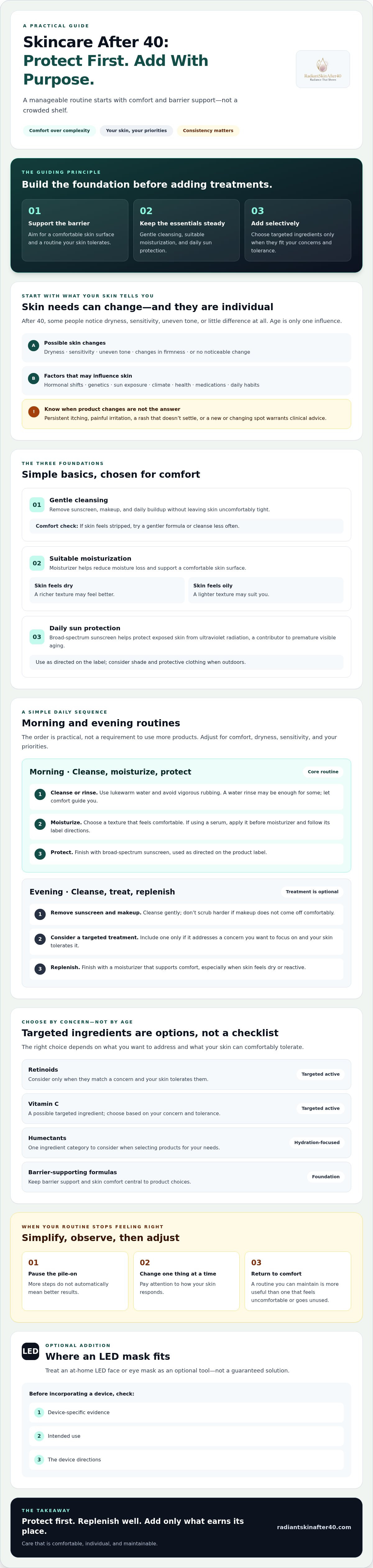
This guide covers a manageable morning and evening routine built around hydration, daily sun protection, and carefully chosen actives. You’ll learn how to introduce ingredients thoughtfully, adjust for your skin’s needs, and decide whether an at-home tool such as an LED mask belongs in your routine. Treat devices as optional additions, not guaranteed solutions. The aim is care you can maintain: protect first, replenish well, and add only what earns its place.
Key Takeaways
- Skincare for women over 40 works best when it reflects your skin’s individual needs, not a one-size-fits-all idea of aging.
- Build a simple morning and evening routine, placing products in a practical order without assuming extra steps mean better results.
- Match ingredients such as retinoids, vitamin C, humectants, and barrier-supporting formulas to your concerns and tolerance.
- When skin feels uncomfortable or a routine becomes hard to maintain, simplify and adjust rather than adding more products.
- Consider LED masks an optional tool, and check device-specific evidence, intended use, and directions before incorporating one.
How Skin Needs Can Change After 40, and What Your Routine Should Prioritize
Skin doesn’t change in the same way for everyone after 40. You may notice dryness, sensitivity, uneven tone, or little difference at all. Age is only one influence. Hormonal shifts, genetics, sun exposure, climate, health, medications, and daily habits can all affect how your skin looks and feels. Build your routine around your experience rather than an age-based checklist.
The skin barrier is the outermost layer of skin. It helps retain moisture and protect against irritants and environmental stressors. When it’s disrupted, skin may feel dry, tight, or reactive. The goal of skincare for women over 40 isn’t to reverse time or achieve perfection. It’s to support comfort and resilience with steps you can maintain.
Why dryness, sensitivity, and uneven tone may become more noticeable
Hormonal changes around perimenopause and menopause can affect skin. The American Academy of Dermatology notes that declining estrogen may contribute to dryness and changes in firmness, though the experience varies from person to person. Sun exposure also contributes to photoaging, which can involve characteristic changes to skin, including uneven pigmentation and texture.
These concerns aren’t inevitable, and they don’t all call for the same response. Persistent itching, painful irritation, a rash that doesn’t settle, or a new or changing spot warrants clinical advice rather than more product experimentation. For routine cosmetic concerns, make one change at a time and pay attention to how your skin responds.
The three foundations of a mature-skin routine
Start with three practical categories. Choose products according to your skin type, sensitivities, and priorities, rather than assuming more layers will produce better results.
- Gentle cleansing: Choose a cleanser that removes sunscreen, makeup, and daily buildup without leaving your skin uncomfortably tight. If your skin feels stripped afterward, try a gentler formula or cleanse less often.
- Suitable moisturization: A moisturizer helps reduce moisture loss and support a comfortable skin surface. A richer texture may feel better when skin is dry; a lighter one may suit skin that feels oily. Let comfort guide your choice.
- Daily sun protection: Broad-spectrum sunscreen helps protect exposed skin from ultraviolet radiation, a contributor to premature visible aging. Apply it as directed on the label, and consider shade and protective clothing when outdoors.
Keep these basics steady before adding targeted actives. A gentle routine you can repeat is more useful than an elaborate one that leaves skin uncomfortable or sits unused.
Build a Simple Morning and Evening Skincare Routine for Women Over 40
A useful routine isn’t defined by its number of steps. It’s built from a few products that suit your skin. In skincare for women over 40, the same basic sequence can be adjusted for dryness, sensitivity, lifestyle, and personal priorities. Keep the essentials consistent, then consider a treatment step only if it addresses a concern you want to focus on.
A measured morning routine: cleanse, moisturize, protect
Use this simple sequence as a starting point. Some people find that rinsing with water is enough in the morning; others prefer a gentle cleanser. Let your skin’s comfort guide the choice.
- 1. Cleanse or rinse. Wash gently with lukewarm water and avoid vigorous rubbing. If your skin feels tight afterward, try a milder approach.
- 2. Moisturize. Apply a moisturizer that feels comfortable. A richer texture may suit skin that feels dry, while a lighter formula may be preferable if heavier products feel uncomfortable. If you use a serum, apply it before moisturizer and follow its label directions.
- 3. Protect. Finish with broad-spectrum sunscreen, used as directed on the product label. Make it part of your morning routine on days when you expect to spend time outdoors.
These are the core steps. If you’re considering additional treatments, the at-home anti-aging skincare routine offers another point of reference.
A considered evening routine: cleanse, treat, replenish
Evening care removes the day’s buildup and can include an optional treatment. Keep the process gentle, especially when your skin feels dry or reactive.
- 1. Remove sunscreen and makeup. Use a cleanser suited to your skin and massage gently rather than scrubbing. If one cleanse doesn’t remove makeup comfortably, follow the product directions for an appropriate removal method instead of rubbing harder.
- 2. Apply an optional treatment. A serum or other active may suit a specific concern, but it isn’t essential for everyone. Introduce one new active at a time, follow its directions, and check that your skin remains comfortable before adding anything else.
- 3. Replenish with moisturizer. Finish with a layer that leaves your skin comfortable. Adjust the texture to your needs instead of adding more layers by default.
If a product causes persistent irritation, pause it and simplify your routine. Seek professional guidance if discomfort continues or becomes concerning. To find products for a simple routine, explore serums and moisturizers for your routine, and check each product’s directions before use.
Choose Skincare Ingredients by Concern, Not by Age
Ingredient labels can make skincare seem more complicated than it needs to be. Start with the concern you want to address. Then consider an ingredient category, the product’s intended use, and how your skin tolerates it. In skincare for women over 40, age alone doesn’t determine which ingredients belong on your shelf.
The guide below is a starting point, not a promise of results. Formulas, concentrations, and individual responses differ, so follow product directions and introduce changes thoughtfully.
| Concern | Ingredient category | Considerations |
|---|---|---|
| Dryness or tightness | Humectants, such as glycerin or hyaluronic acid | Humectants help attract and hold water in the outer skin. A humectant serum may feel hydrating, but it isn’t necessarily a complete moisturizer. |
| Dry, easily unsettled skin | Barrier-supporting ingredients, such as ceramides | These can be included in moisturizers designed to support the skin barrier. The full formula and your own tolerance matter. |
| Uneven-looking tone | Vitamin C | Topical vitamin C is used in antioxidant and tone-focused products. Formulation affects stability and feel, and visible results aren’t assured. |
| Visible lines or rough texture | Retinoids | Some topical retinoids are used to target signs of photoaging, but they may irritate skin. Suitability depends on the product and the person. |
Hydration and comfort: humectants and moisturizers
Humectants are ingredients that draw water into the outer layers of skin. Moisturizers are finished formulations that may combine humectants with emollients, which soften skin, and occlusive ingredients, which help limit moisture loss. Look beyond a single headline ingredient: a lightweight lotion and a richer cream can feel very different, even when both are designed to moisturize. Choose a texture you’ll use consistently, and reassess if it leaves your skin uncomfortable.
Tone and texture: introducing targeted actives carefully
Retinoids and vitamin C have different roles. Retinoids are used in products targeting concerns such as visible lines and texture; vitamin C is commonly included in antioxidant and uneven-tone formulas. Neither is essential for everyone, and evidence and tolerability depend on the specific formulation. For more texture-focused ideas, explore this skin texture guide.
Introduce one active at a time so you can identify how your skin responds. A patch test, following the product’s directions, may help you notice irritation before applying it more broadly, though it can’t guarantee you won’t react. If you’re pregnant, have a medical condition, experience persistent reactions, or aren’t sure an ingredient is appropriate, ask a qualified clinician for guidance. Comfortable skin comes first.
Adjust Your Skincare Routine to Your Skin’s Concerns and Tolerance
A routine should be adaptable. Skin may feel comfortable for months, then respond differently to weather, stress, health changes, or a new product. For skincare for women over 40, personalization means noticing what your skin is telling you and making measured adjustments. It doesn’t mean treating every concern as a flaw that needs correcting.
Use the concern as a guide, not a diagnosis:
- Dryness: Consider a richer moisturizer or a gentler cleansing approach. If a serum seems to leave your skin feeling tight, pause it and see whether comfort improves.
- Visible lines: Keep daily sun protection steady. If you’re considering a targeted active, choose one suited to your concern and introduce it cautiously.
- Uneven tone: Review sun exposure and sunscreen habits before adding a tone-focused product. Avoid layering several new actives at once.
- Skin that feels reactive: Temporarily set aside optional products, especially recently introduced actives, and return to a few familiar, comfortable steps.
When skin feels dry, reactive, or easily overwhelmed
Simplify first. Use gentle cleansing, a moisturizer that feels comfortable, and sunscreen during the day. Don’t assume a particular ingredient will resolve irritation, and avoid trying several replacements at once. If symptoms persist or worsen, or if skin is painful, seek advice from a qualified medical professional. A new or changing spot also deserves clinical attention rather than cosmetic experimentation.
If you’re considering an optional device for the eye area, review its intended use and instructions before deciding whether it belongs in your routine. This LED eye mask guide can help you consider that category without treating a device as a substitute for routine care.
How to assess a routine without chasing instant results
Give a routine time to become familiar, but follow each product’s directions rather than applying it more often in pursuit of faster change. Track simple observations: does your skin feel more comfortable, less dry, or more irritated? A brief note of what you used and when can help you identify patterns if a reaction appears.
Visible cosmetic changes vary with the product, the concern, and the individual. No fixed timeline or dramatic outcome is guaranteed. If a product causes discomfort, pause it; if the reaction persists, seek professional guidance. A simpler routine you can maintain may be the most useful adjustment.
For a considered next step, explore skincare tools and moisturizers that may fit your routine, and check product directions before use.
Where LED Face and Eye Masks Fit in a Skincare Routine After 40
An at-home LED face or eye mask can be an optional addition to skincare for women over 40, not a foundation for it. It doesn’t replace cleansing, moisturizer, or daily sun protection, and owning a device doesn’t guarantee a visible result. Evidence and intended use vary between devices, so assess each one using its own information rather than relying on broad claims about LED skincare.
What to consider before adding an at-home LED mask
Read the device instructions before use. Check its stated intended use, safety information, and any cautions provided by the manufacturer. Don’t assume directions for one mask apply to another, or that a device is appropriate for every skin concern.
If you have a medical condition, take medication that may affect light sensitivity, or have an eye concern, seek guidance from a qualified health professional before using a device. Stop and reassess if you experience discomfort, and follow the product’s directions for next steps. Verify claims about performance or safety against current, device-specific information. Marketing language is not a substitute for evidence.
Create a routine that feels considered and sustainable
Keep essentials in their proper place. Cleanse first, use an LED device only as its instructions allow, then apply moisturizer and maintain your usual daytime sun protection. The precise order may depend on the device’s directions, so follow those rather than adding steps by assumption. A tool should support a routine that already feels comfortable, not make it harder to maintain.
Consider whether the device’s intended use fits your priorities, whether you can follow its instructions, and whether it feels practical for your routine. If the answers aren’t clear, there’s no need to add one. For broader considerations when evaluating at-home devices, see this at-home beauty technology guide.
LED masks are one category among the beauty devices available for home use, and outcomes shouldn’t be assumed or promised. If you’d like to review the available options, explore LED face and eye masks and consult each device’s current product information before deciding whether it suits your routine.
Make Your Routine Your Own
Thoughtful skincare for women over 40 isn’t about following a longer checklist. It’s about noticing what your skin needs, keeping the basics comfortable and consistent, and choosing targeted ingredients according to your concerns and tolerance. If a product causes discomfort, simplify and reassess rather than pushing through.
At-home devices can be optional additions, not replacements for cleansing, moisturization, or sun protection. Their intended use and directions vary, so review current product information and keep expectations realistic.
RadiantSkinAfter40 offers LED face and eye masks, along with skincare products and tools for at-home routines. If you’re considering an LED option, explore LED face and eye masks and review the details before deciding whether one fits your needs.
Let comfort lead. A considered routine can evolve with you, one well-chosen step at a time.
Frequently Asked Questions
What is the best skincare routine for women over 40?
The best routine is one your skin tolerates and you can maintain. In the morning, cleanse or rinse as preferred, moisturize if needed, and apply broad-spectrum sunscreen as directed. In the evening, gently remove sunscreen and makeup, use an optional targeted treatment if appropriate, then moisturize. Start with these essentials before adding more steps. If a product causes persistent discomfort, pause it and seek qualified medical advice.
Which skincare ingredients are best for skin after 40?
No single ingredient is best for everyone. Humectants, such as glycerin, can help attract water to the skin’s outer layers, while moisturizers may combine them with ingredients that soften skin or reduce moisture loss. Retinoids and vitamin C are used in products targeting different concerns, such as visible lines or uneven tone. Formulation and individual tolerance matter, so choose according to your priorities and follow product directions.
Can women over 40 use retinol every day?
Some people may tolerate daily retinol use, but it isn’t right for everyone, and daily application shouldn’t be assumed. Follow the specific product directions, introduce it cautiously, and monitor for dryness, redness, or irritation. If discomfort develops, pause use rather than pushing through. If you’re pregnant, have a medical condition, or aren’t sure retinol is suitable for you, ask a qualified clinician before using it.
Is sunscreen still important for mature skin?
Yes. Sunscreen remains a useful daily protection step at every age, helping shield exposed skin from ultraviolet radiation, which contributes to photoaging. Choose a broad-spectrum product and use it according to its label directions. Remember exposed areas such as the face, neck, and hands. Sun protection can support skin health, but it won’t erase existing changes or replace other protective habits, such as seeking shade and wearing protective clothing outdoors.
How often should I change my skincare routine after 40?
There’s no set schedule for changing a routine. Keep using products that feel comfortable and fit your needs; reassess when your skin, environment, health, or preferences change. Introduce one new product at a time so it’s easier to notice a reaction. Track comfort and dryness rather than changing several products in pursuit of quick results. If irritation persists or a skin concern changes, seek qualified medical advice.
Do LED face masks work for women over 40?
Results aren’t guaranteed, and evidence and intended use can vary between LED face and eye masks. Consider a mask an optional beauty tool, not a replacement for cleansing, moisturizing, or sun protection. Before use, review the device’s intended use, instructions, and safety information. If you have a medical condition, take medication that may affect light sensitivity, or have an eye concern, ask a qualified health professional for guidance.