


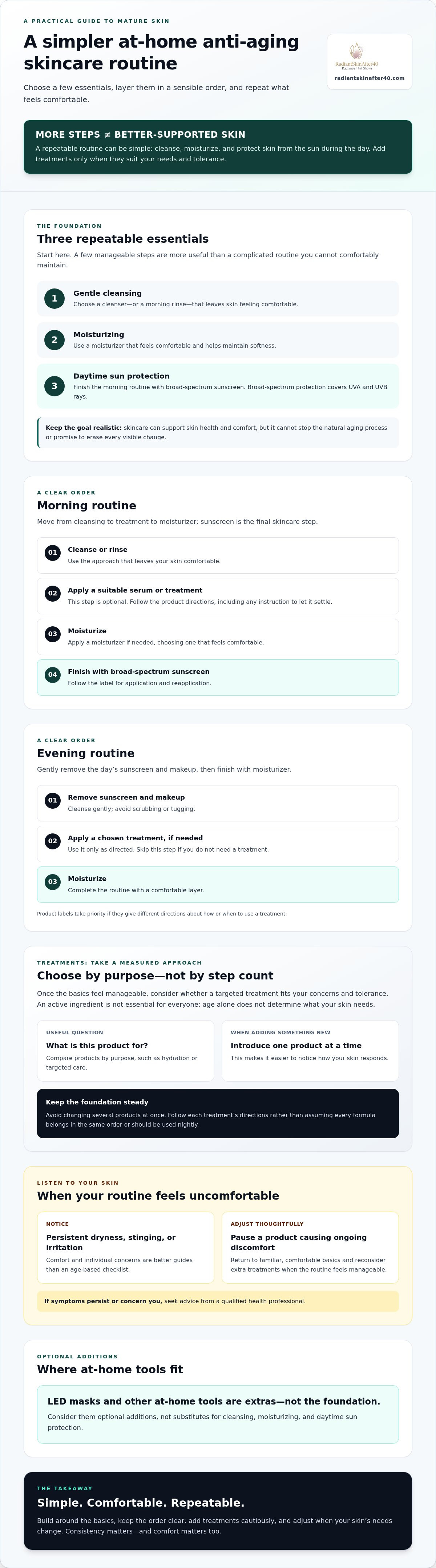
More steps don’t necessarily mean better-supported skin. A thoughtful at home anti aging skincare routine can be simple: choose a few essentials, layer them in a sensible order, and use them consistently.
If you’re unsure whether to apply serum or moisturizer first, or concerned that active ingredients might leave mature skin feeling dry or unsettled, you’re not alone. Skin needs can change, and a routine should support your skin rather than ask it to tolerate more than it can manage.
This guide covers practical morning and evening steps, product order, and a measured approach to adding active ingredients. You’ll also learn how to adjust when your skin feels sensitive or your routine stops feeling realistic. The focus is on choosing a few manageable steps, from moisture and daytime sun protection to optional at-home tools. Consistency matters, and comfort matters too.
Key Takeaways
- Build an at home anti aging skincare routine around repeatable basics, then choose treatments that suit your skin’s needs and tolerance.
- Follow a clear morning and evening sequence so you know what to apply first and what belongs in your daytime routine.
- Compare products by purpose, such as hydration or targeted care, rather than adding steps for the sake of complexity.
- Use signs of dryness or sensitivity as cues to review your routine and adjust it to changing skin needs.
- Consider LED masks and other at-home tools as optional additions, not substitutes for cleansing, moisturizing, and sun protection.
Anti-Aging Skincare Goals for Mature Skin
Skin can change over time, and so can what feels comfortable. Dryness, sensitivity, and texture concerns may become more noticeable for some people, while others find their needs stay much the same. Age alone doesn’t determine what your skin needs. Let your comfort and individual concerns guide your choices.
An at-home anti-aging skincare routine is a repeatable set of steps that cleanses, moisturizes, and protects skin from the sun during the day. It can support skin health and comfort, but it can’t stop the natural aging process. Think of it as consistent care, not a promise to erase every visible change.
Which skincare priorities matter most after 40?
Start with a gentle cleanser that leaves your skin feeling comfortable, then use moisturizer to help maintain softness and reduce the feeling of dryness. In the morning, finish with broad-spectrum sunscreen. Broad-spectrum protection covers both UVA and UVB rays, making it a practical daily step for limiting sun exposure that contributes to visible skin changes.
Once these basics feel manageable, consider whether a targeted treatment fits your goals and tolerance. For example, retinoids are a category of ingredients used in skincare products, but an active ingredient isn’t essential for everyone. Choose based on your own concerns rather than an age-based checklist.
How simple should a beginner routine be?
Keep your first routine uncomplicated. A few steps you can repeat are more useful than a shelf full of unfamiliar products. Begin with cleansing, moisturizing, and daytime sun protection. If you want to try a serum or another treatment, introduce one new product at a time so it’s easier to notice how your skin responds.
- Keep the foundation steady. Avoid changing several products at once.
- Notice comfort. Pay attention to persistent dryness, stinging, or irritation.
- Adjust thoughtfully. Pause a product that causes ongoing discomfort and seek advice from a qualified health professional if symptoms persist or concern you.
Your routine should be flexible, not demanding. If your skin feels unsettled, returning to familiar, comfortable basics can be a sensible reset. Reconsider additional treatments when your routine feels manageable again. The aim is a sustainable at home anti aging skincare routine that respects your skin’s changing needs, not a complicated sequence you feel obliged to maintain.
How to Build a Morning and Evening Skincare Routine at Home
Following a clear order makes a routine easier to repeat. In general, move from cleansing to treatment to moisturizer, with sunscreen last in the morning. Product labels take priority if they give different instructions, especially about how or when to use a treatment.
A simple morning routine is cleanse, apply a suitable treatment, moisturize, then finish with broad-spectrum sunscreen. The National Institute on Aging’s Skin Care and Aging guide also offers helpful background on caring for skin as it changes.
What belongs in a simple morning routine?
Choose steps that feel comfortable and are easy to repeat. If your skin feels comfortable when you wake up, rinsing may be enough. Otherwise, use a gentle cleanser according to its directions. Apply a serum after cleansing if it suits your needs. Moisturize if needed, then make sunscreen the final skincare step. Use it as directed on the label.
- Cleanse or rinse. Choose the approach that leaves your skin comfortable.
- Apply a suitable serum or treatment. Follow its directions and allow it to settle before the next step if instructed.
- Moisturize. Apply a moisturizer that feels comfortable on your skin.
- Use broad-spectrum sunscreen. Finish with sunscreen and follow the label for application and reapplication.
What belongs in an uncomplicated evening routine?
In the evening, gently remove the day’s sunscreen and makeup, then apply leave-on products to clean skin. If you use a treatment, follow its specific directions rather than assuming every formula belongs in the same order or should be used nightly. Finish with moisturizer to support comfort.
- Remove sunscreen and makeup. Cleanse gently without scrubbing or tugging.
- Apply a chosen treatment. Use it only as directed. Skip this step if you don’t need a treatment.
- Moisturize. Complete the routine with a comfortable layer.
Keep the sequence steady as you introduce new products. Starting several active products at once can make it hard to identify what is causing discomfort. Add one unfamiliar product at a time, and follow its label even if that means adjusting the usual order. A practical at home anti aging skincare routine is less about including every possible step and more about choosing products you can use consistently.
If you’re considering products for these steps, explore serums and moisturizers and compare them with your skin’s needs and tolerance.
How to Choose Treatments Without Overloading Mature Skin
Choose each product for a clear purpose. A moisturizer supports comfort, a serum or treatment may target a particular concern, and sunscreen helps protect skin from UV exposure during the day. The aim is a balanced routine, not the longest one. More products don’t automatically mean better care.
| Product category | Routine role | Practical selection considerations |
|---|---|---|
| Moisturizer | Helps support skin comfort and reduce the feeling of dryness. | Choose a texture that feels comfortable and suits your skin’s needs. Follow the product directions. |
| Serum or treatment | Provides targeted care based on an individual concern. | Check the ingredient list and directions. Consider your skin’s tolerance, and introduce one new product at a time. |
| Broad-spectrum sunscreen | Provides daytime protection from UVA and UVB rays. | Choose a product you’re comfortable applying, then follow its label for use and reapplication. |
Ingredient suitability varies from person to person. A formula that feels comfortable for someone else may not suit your skin, and a product’s directions matter as much as its category. Use the table to clarify what each step is for, not as a checklist that every routine must include.
How should you introduce active skincare ingredients?
Read the label before use, including directions and cautions. Add one unfamiliar active product at a time instead of starting several together. Follow the frequency stated on the product and pay attention to how your skin responds. Don’t assume ingredients can always be combined or used in a particular order. Check product guidance, and ask a qualified healthcare professional if you’re uncertain about a specific concern.
How can you recognize a routine that feels too intensive?
Persistent stinging, ongoing discomfort, or worsening irritation can be signs to reassess your routine. Simplify to familiar products that feel comfortable, and discontinue products that seem to trigger symptoms. If the reaction persists or concerns you, consult a qualified healthcare professional.
A considered at home anti aging skincare routine leaves room to adapt. If you’re unsure what changed, note which products you introduced and when the discomfort began. That record can help you describe the issue clearly when seeking professional advice.
How to Adjust Your Routine for Dryness, Sensitivity, and Changing Needs
A routine should respond to your skin, not stay fixed by the calendar. Cold weather, indoor heating, dry air, a change in climate, or shifts across life stages can affect how products feel. Personal tolerance matters too. These changes may influence comfort, but symptoms alone can’t tell you what’s causing them.
What should you change when skin feels dry or sensitive?
Start by reviewing the steps you can control. Choose gentle cleansing and a moisturizer that feels comfortable. If optional treatments seem to make discomfort worse, consider temporarily simplifying your routine. Avoid adding several new products in an attempt to solve dryness quickly. A short pause and a simpler routine can make it easier to notice what your skin tolerates.
Use this checklist when your skin feels dry or reactive:
- Have you introduced a new product or changed how often you use one?
- Does cleansing leave your skin feeling tight or uncomfortable?
- Does a particular product seem to trigger or worsen irritation?
- Can you temporarily return to familiar, comfortable steps?
Adjust one variable at a time, such as pausing one optional product, and observe your response before making another change. This won’t identify a medical cause, but it can help you spot patterns. If symptoms persist, worsen, or concern you, consult a qualified healthcare professional rather than relying on routine adjustments alone.
How can you make a routine easier to maintain?
Link skincare to habits you already have. For example, cleanse and moisturize after brushing your teeth, or keep your morning steps near the place where you get ready. A stable foundation makes it easier to continue without turning skincare into another demanding task. Add optional steps only when they serve a clear purpose and fit comfortably into your day.
A brief tracking note can help you spot patterns. Record the product, when you used it, and any noticeable reaction. If your skin feels different after a weather or life-stage change, a simple record can help you review what changed without switching everything at once.
Your at home anti aging skincare routine can evolve while its core remains familiar. If you’re reassessing moisture and comfort, explore moisturizers for your routine and compare options with your needs and tolerance in mind.
Where LED Masks and Other At-Home Tools Fit in a Skincare Routine
At-home tools can add a technology step to a skincare ritual, but they’re optional. They don’t replace the essentials of cleansing, moisturizing, and daytime sun protection. Consider whether a tool suits your preferences and whether you’ll use it consistently, rather than treating it as a required part of an at home anti aging skincare routine.
Before using an LED mask or another device, read its specific instructions and safety information. Check how the device should be used, who should avoid it, and whether any precautions apply to you. Don’t assume all masks work the same way or offer identical guidance. If you have a health concern or are unsure whether a device is appropriate for you, ask a qualified healthcare professional.
How should an LED mask fit around topical skincare?
Follow the device manual for session timing, frequency, and whether the mask should be used before or after topical products. There’s no universal layering rule because device designs, instructions, and topical formulas can differ. Check the directions for both the mask and each skincare product, and don’t combine them in a way the instructions don’t support.
If you’re considering a serum alongside an LED mask, see the guide Best Serums for LED Mask Treatments in 2026 for more context. Treat compatibility as product-specific, rather than assuming it based on a broad ingredient category.
How can you decide whether a skincare tool suits you?
Consider comfort, ease of use, clear instructions, and whether the routine fits your day. A tool that feels awkward or difficult to use may not be a practical choice, even if it sounds appealing. You don’t need a device to have a considered skincare routine. Choose one only if it aligns with your preferences and you can follow its directions.
For a broader look at home-use options, explore the guide Advanced Beauty Technology for Home: The Best Skin Tightening Devices of 2026. Base your decision on the specific device’s instructions and safety information, rather than assuming all tools work alike.
RadiantSkinAfter40 offers LED face and eye masks, along with serums, moisturizers, and skincare tools. Explore at-home skincare and LED mask options to compare product categories with your routine and tolerance.
Make Your Routine a Lasting Ritual
A thoughtful at home anti aging skincare routine doesn’t need to be elaborate. Let cleansing, moisturizing, and daytime sun protection form its foundation, then add treatments only when they suit your needs and your skin’s tolerance. Keep the order clear, follow product directions, and adjust when comfort changes.
Consistency comes from choosing steps you can return to, not from trying every product or tool. LED masks and other at-home skincare tools can be optional additions while your core routine stays steady. RadiantSkinAfter40 offers LED face and eye masks, along with serums, moisturizers, and skincare tools to consider as you shape your approach.
Explore skincare and at-home LED options, then choose what feels appropriate for your routine. Small, consistent steps can make skincare more manageable. Build a ritual that supports your skin today and can adapt with you over time.
Frequently Asked Questions
What is the best at-home anti-aging skincare routine for mature skin?
The best routine is one you can follow consistently and that feels comfortable on your skin. Begin with gentle cleansing, moisturizer, and broad-spectrum sunscreen during the day. Add a serum or other treatment only if it suits your needs and you can follow its directions. Skin varies from person to person, so an effective routine doesn’t need to be complex or built around age alone.
What order should I apply skincare products in the morning and at night?
In the morning, generally cleanse or rinse, apply a suitable treatment, moisturize, then finish with broad-spectrum sunscreen. At night, gently remove sunscreen and makeup, apply any chosen leave-on treatment as directed, then moisturize. Product labels take priority if they specify a different order or method. Keeping the sequence simple can make products easier to use consistently and help you notice how your skin responds.
Can I use an LED face mask with my regular skincare products?
Possibly, but the correct order depends on the specific device and topical products. Follow the mask’s manual for session timing, frequency, skin preparation, and whether products should be applied before or after use. Check topical product directions too. Don’t assume every LED mask or serum has the same compatibility. If instructions are unclear or you have a health concern, ask a qualified healthcare professional before use.
How often should I change my skincare routine as my skin changes?
There’s no set schedule for changing a routine. Review it when your skin’s comfort or needs shift, such as during a change in climate or if products begin to feel irritating or drying. Change one step at a time and note what you changed and how your skin responds. If symptoms persist, worsen, or concern you, seek advice from a qualified healthcare professional rather than repeatedly switching products.
Should I use a serum before or after moisturizer?
In many routines, a serum goes after cleansing and before moisturizer, since moisturizer is commonly used to finish the topical steps. However, formulas and directions vary, so follow the product label if it gives a different application method. Introduce an unfamiliar serum on its own rather than alongside several new products. That makes it easier to notice whether it feels comfortable and suits your routine.
Is sunscreen necessary in an anti-aging skincare routine at home?
Broad-spectrum sunscreen is a useful daytime skincare step because it protects against both UVA and UVB rays. Use it as directed on the label, including any application and reapplication guidance. Sunscreen supports protection from sun exposure that contributes to visible skin changes, but it doesn’t stop natural aging. Choose a product you’re comfortable using as part of your regular morning routine.
What should I do if a new skincare product irritates my skin?
Pause the new product if it appears to cause persistent stinging, discomfort, or worsening irritation. Keep your routine simple with familiar products that feel comfortable, and avoid adding other unfamiliar products while you assess the reaction. Symptoms alone can’t identify the cause. If irritation continues, worsens, or feels concerning, consult a qualified healthcare professional for advice.