


What if the most effective way to restore radiance after 40 is to do less, more consistently? If your skin looks dull, dry, or less even than it once did, it’s understandable to wonder whether you need stronger products, a longer routine, or expensive treatments. Often, a thoughtful foundation matters more than adding another step.
Learning how to get radiant skin after 40 starts with supporting the skin barrier and protecting skin from daily sun exposure. A simple routine can bring together gentle cleansing, moisturizer, broad-spectrum sunscreen, and a targeted serum chosen for your needs. Results take time, and no product can promise to turn back the clock, but steady care can support a healthier-looking glow.
This guide explains what may change in mature skin, which everyday habits and ingredients are worth considering, and how to build a realistic morning and evening routine. We’ll also look at LED masks as an optional at-home addition, including what to check in device instructions and safety information before use. The goal is clarity, not complexity: a few purposeful choices you can sustain.
Key Takeaways
- Learn how to get radiant skin after 40 by focusing on consistent care and realistic expectations, rather than quick fixes.
- Understand how dryness, cumulative sun exposure, and slower skin renewal can influence the look of tone and texture.
- Choose skincare ingredients according to your goal, skin sensitivity, and existing routine, not simply because they’re trending.
- Build your routine gradually: address one concern, add one targeted step, and change one product at a time.
- Consider at-home LED as an optional extra, and check a device’s intended use, instructions, and safety guidance before using it.
Why skin can look less radiant after 40, and what that means
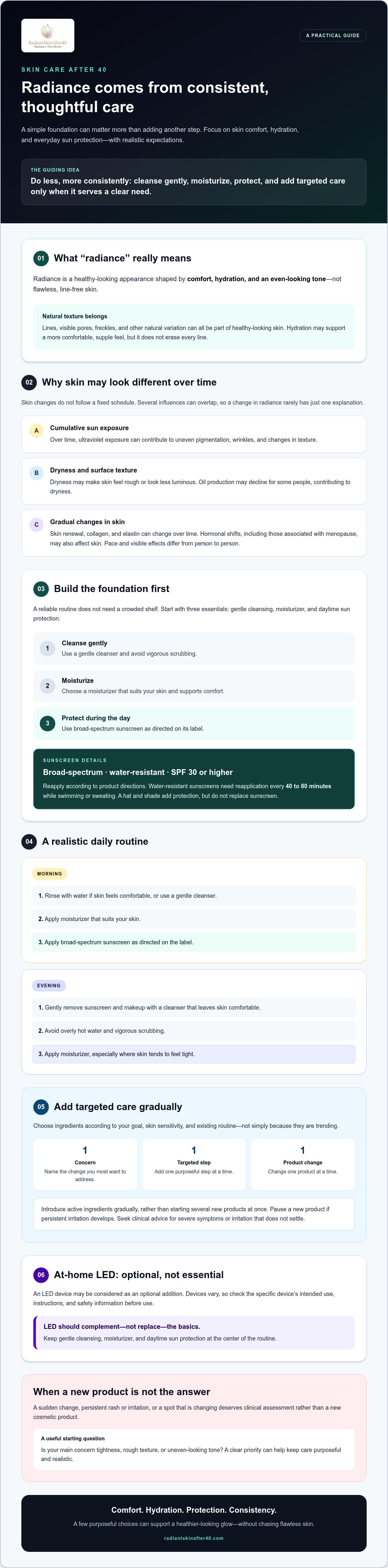
Radiance isn’t flawless, line-free skin. It’s a healthy-looking appearance shaped by comfort, hydration, and an even-looking tone. That definition leaves room for natural texture and variation while giving you practical priorities for care.
Skin changes over time, but not on a fixed schedule. Cumulative ultraviolet exposure can contribute to uneven pigmentation, wrinkles, and changes in texture, a process known as Photoaging. Dryness may make the surface feel rough or look less luminous, while gradual changes in skin renewal can affect how smooth and even it appears. These influences can overlap, so a change in radiance rarely has just one explanation.
What changes in mature skin can affect its glow?
Collagen and elastin help give skin structure and flexibility. Their levels and organization can change with age, although the pace and visible effects differ from person to person. Oil production may also decline for some people, contributing to dryness or a rough-feeling surface. Hormonal shifts, including those associated with menopause, can affect skin too, but age alone doesn’t explain every new concern.
Gradual changes in dryness, fine lines, or tone are common. A sudden change, a persistent rash or irritation, or a spot that is changing deserves clinical assessment rather than a new cosmetic product. Pay attention to how your skin feels as well as how it looks. This can help you distinguish a routine concern from something that needs professional evaluation.
Radiance is not the same as wrinkle-free skin
Healthy-looking skin can still show lines, visible pores, freckles, and other natural variation. Hydration can support a more comfortable, supple feel, but it doesn’t erase every line. Similarly, a more even-looking tone is a reasonable skincare goal, not a promise to reverse aging or create flawless skin.
To decide how to get radiant skin after 40, start by naming the change you most want to address. Is your main concern tightness, rough texture, or uneven-looking tone? A clear priority makes it easier to choose purposeful care instead of layering products in pursuit of an unrealistic ideal. Radiance is built through consistent attention to skin comfort and protection, with room for your own definition of healthy-looking skin.
The foundations of radiant skin after 40: protect, cleanse, and moisturize
A reliable routine doesn’t need a crowded shelf. Start with three essentials: gentle cleansing, moisturizer, and daytime sun protection. These steps help limit avoidable irritation, support skin comfort, and protect against ongoing UV exposure. Consistency and tolerability matter more than layering active ingredients your skin may not need.
A simple morning routine for a brighter-looking complexion
Keep the sequence calm and practical. If your skin feels comfortable, a water rinse may be enough in the morning. Otherwise, use a gentle cleanser. Follow with a moisturizer that suits your skin, then apply broad-spectrum sunscreen as directed on its label.
The American Academy of Dermatology recommends broad-spectrum, water-resistant sunscreen with SPF 30 or higher. Reapply according to the product directions; water-resistant sunscreens need reapplication every 40 to 80 minutes while swimming or sweating. A hat and shade add useful protection, but they don’t replace sunscreen.
Morning, in order: cleanse or rinse, moisturize, then apply broad-spectrum sunscreen.
An uncomplicated evening routine that respects the skin barrier
At night, gently remove sunscreen and makeup with a cleanser that leaves skin comfortable. Avoid vigorous scrubbing and overly hot water, both of which can aggravate dryness or irritation. Apply moisturizer afterward, especially where skin tends to feel tight.
If you later add an active ingredient, introduce it gradually rather than starting several new products at once. Pause the new product if persistent irritation develops, and seek clinical advice for symptoms that are severe or don’t settle. A routine should feel supportive, not like a daily test of your skin’s tolerance.
For anyone considering a device as an optional addition, Harvard Health Publishing offers a measured overview of at-home LED therapy. Devices vary, so check the intended use, instructions, and safety information for the specific device before use. LED should complement, not replace, the basics.
Moisturizers and serums may be options for the moisturizing step or a later targeted addition. The best starting point is still the one your skin can comfortably tolerate day after day.
Which skincare ingredients can support radiance, and how should you choose?
Choose ingredients by the concern you want to address, not by the promise on the label. For a comfortable, hydrated feel, look at humectants such as glycerin or hyaluronic acid, paired with moisturizers that help reduce water loss. For uneven-looking tone or texture, vitamin C and retinoids are options to research, not universal requirements. Skin type, sensitivity, existing conditions, medications, and products already in your routine all matter.
Hydration and barrier-supporting ingredients
Humectants attract water to the skin’s surface, while moisturizing ingredients help keep that surface feeling soft and comfortable. A well-moisturized surface may look smoother and less dull, but that visible effect doesn’t mean the skin’s underlying structure has changed. If a product is unfamiliar, test it on a small area first and follow its directions. Persistent irritation is a reason to stop and simplify.
Brightening and texture-focused ingredients: choose with care
Vitamin C may appeal if uneven-looking tone is your priority; retinoids may be considered for texture concerns. Both can irritate some skin, and neither is an essential step. Introduce one new active at a time and gradually, following the product label. Keep daytime sun protection in your routine, especially when using products that may increase sensitivity. If you’re pregnant, take medication that could affect skin, or have a history of irritation, ask a qualified healthcare professional whether a retinoid is suitable for you.
| Goal | Ingredient category | Cautious-use note | Realistic expectation |
|---|---|---|---|
| Hydration | Humectants, such as glycerin or hyaluronic acid | Pair with a moisturizer if needed; patch test unfamiliar products. | Skin may feel more comfortable and look temporarily smoother. |
| Uneven-looking tone | Vitamin C | Introduce gradually; use daytime sun protection. | May support a brighter-looking appearance, but results vary. |
| Texture | Retinoids | Start cautiously; seek professional guidance if pregnancy, medication, or irritation is a concern. | May be an option for texture, but isn’t right for everyone. |
For how to get radiant skin after 40, let your skin’s response guide the next step. Avoid starting several active ingredients together: if irritation appears, it’s harder to identify the cause. Choose one product for one priority, give yourself time to assess comfort and usefulness, and keep the rest of your routine steady. For persistent discoloration, sensitivity, or texture changes, seek individualized advice from a qualified professional rather than escalating products on your own.
How to create a realistic routine for radiant skin after 40
A sustainable routine begins with a clear priority, not a full shelf of new products. Use this sequence to make thoughtful changes and see how your skin responds.
- Identify one concern. Decide whether dryness, uneven-looking tone, texture, or another issue is your main focus. If texture is the priority, see Improve Skin Texture After 40: Guide to Ageless Radiance for more focused guidance.
- Establish the basics. Keep gentle cleansing, moisturizer, and daytime sun protection steady. These foundational steps give you a consistent baseline while you assess any optional addition.
- Add one targeted step. Choose a product suited to your concern and introduce it according to its directions. Avoid changing several products at once; otherwise, it’s harder to tell what’s helping or causing irritation.
- Review your experience. Notice whether the product feels comfortable and useful over time. Don’t expect a precise transformation schedule or judge the result from a single use.
Build a routine around one priority at a time
Keep the rest of your routine familiar while testing an addition. For example, if dryness is your focus, maintain your usual sun protection and consider whether your moisturizer leaves skin comfortable. If you’re addressing tone or texture, resist adding multiple active ingredients together. A measured approach makes your routine easier to adjust and less likely to overwhelm sensitive skin.
Track comfort and consistency without over-monitoring
A brief routine log can help you spot patterns without turning skincare into a daily inspection. Record the product, how often you use it, and any noticeable comfort, dryness, stinging, or irritation. If discomfort continues, stop the new product and seek advice from a qualified clinician. Sudden, painful, persistent, or otherwise concerning skin changes also warrant clinical evaluation rather than trial-and-error product changes.
Understanding how to get radiant skin after 40 is less about following a perfect schedule and more about making considered choices you can sustain. Keep your notes simple, give each change a fair assessment, and adjust based on your skin’s response.
Skincare options for mature skin include moisturizers and serums to consider when they fit your priority.
Can at-home LED support radiant skin after 40?
An at-home LED mask may be an optional addition to a skincare routine, but it isn’t a foundation. It doesn’t replace sunscreen, moisturizer, or professional assessment of a skin concern. Evidence, intended use, and safety guidance can differ between devices, so don’t assume one mask’s claims or directions apply to another.
What to consider before adding an LED face or eye mask
Read the device documentation before use. Check which treatment area it’s designed for, how it should be used, what precautions apply, and what eye-safety guidance the manufacturer provides. Don’t infer a treatment schedule, technology, or expected result from another device’s description. If you’re unsure whether a mask is suitable for you, or have a condition or medication that may affect use, ask a qualified clinician before starting.
For more focused considerations around the eye area, see At-Home LED Eye Mask: 2026 Guide for Mature Skin.
Keep device expectations measured and routine-first
Results aren’t guaranteed, and individual responses may differ. A device can’t diagnose the cause of a new mark, persistent irritation, or another unexplained skin change. Seek clinical assessment for concerns that are sudden, painful, persistent, or otherwise worrying rather than trying to address them with a mask.
Think of LED as a possible extra, not a shortcut. If your cleansing, moisturizing, and sun-protection habits aren’t established, focus there first. If they are, consider whether a device’s purpose, instructions, safety information, and use requirements genuinely fit your routine. The question of how to get radiant skin after 40 is best answered with choices that are purposeful, tolerable, and realistic, not with technology alone.
An at-home device may suit some routines. Before deciding whether one belongs in yours, review its intended use, instructions, and safety information.
Build Your Radiance Routine, One Step at a Time
Radiance after 40 isn’t about flawless skin or a complicated shelf. It’s a healthy-looking appearance supported by daily care that feels comfortable and realistic for you. Gentle cleansing, moisturizer, and broad-spectrum sun protection provide a steady foundation; a targeted ingredient can be considered later, based on your priorities and skin’s tolerance.
As you explore how to get radiant skin after 40, keep changes gradual. Choose one concern to focus on, introduce one new step at a time, and pay attention to comfort rather than expecting an overnight transformation. At-home LED may be an optional complement, but it doesn’t replace foundational skincare or professional assessment when a skin change is concerning.
RadiantSkinAfter40 offers LED face and eye masks for home use, along with serums, moisturizers, and skincare tools. If you’re considering an LED mask, compare its intended use, instructions, and safety information before deciding whether it fits your routine.
Small, thoughtful steps can add up. Choose care that suits your skin, then give consistency room to work. Explore LED face and eye masks for at-home skincare.
Frequently Asked Questions
Is it possible to get radiant skin after 40?
Yes, consistent, gentle care can support a healthier-looking complexion after 40. Daily sun protection, suitable cleansing, and moisturizing are sensible foundations, though visible changes differ with skin type, health, hormones, and past sun exposure. Aim for skin that feels comfortable and looks cared for, rather than expecting a particular result. If a change is sudden, persistent, or concerning, seek advice from a qualified healthcare professional.
What is the best skincare routine for radiant skin after 40?
A useful starting point is gentle cleansing, moisturizer, and broad-spectrum sunscreen in the morning, followed by gentle cleansing and moisturizer in the evening. Add a targeted ingredient only if it suits your concern and your skin tolerates it. There isn’t one routine that works for everyone. Keeping a few suitable steps consistent is generally more practical than using many products at once.
Can sunscreen improve the appearance of aging skin?
Sunscreen helps protect skin from ultraviolet exposure, which contributes to visible photoaging. Treat it as a preventive daily habit, and add shade or protective clothing when appropriate. Sunscreen won’t erase existing lines or spots, but regular use supports protection from further sun-related damage. Choose a product that suits your needs, follow its label directions, and consult reliable dermatology guidance for application and reapplication advice.
Which ingredients help dull skin after 40?
The right ingredient depends on what’s contributing to a dull appearance, such as dryness, uneven-looking tone, or rough texture. Hydrating ingredients and moisturizers may improve comfort and the look of dry skin; other active ingredients may suit particular concerns. Introduce one unfamiliar product at a time, follow its directions, and consider your skin’s sensitivity and existing routine. Stop using it if significant irritation develops.
How long does it take to see results from a skincare routine?
Timing varies with the product, concern, consistency, and your skin’s response. A moisturizer may help dry skin feel more comfortable sooner than an ingredient intended to address gradual changes in tone or texture. Don’t expect an overnight transformation or rely on a timeline unless it’s supported by the product instructions and reliable evidence. Seek professional advice if irritation persists or your concern worsens.
Is an LED face mask necessary for radiant skin after 40?
No, an LED face mask isn’t necessary for healthy-looking skin. It’s an optional at-home device, while sun protection and a tolerable skincare routine remain foundational. LED technology, intended use, instructions, and evidence vary between devices, so review the guidance for the exact mask you’re considering. If you have a relevant skin condition or are unsure whether a device is suitable, ask a qualified clinician before use.
When should I see a dermatologist about a skin change after 40?
Seek professional advice about a new or changing spot, a persistent rash, ongoing irritation, or any skin change that concerns you. Online skincare guidance can’t determine the cause. A qualified clinician can assess the change and discuss appropriate care. It’s especially sensible to ask for individualized advice if you have a skin condition, take medication that may affect your skin, or are considering an active ingredient or device that may not suit you.