


The most effective change to your skincare routine for menopausal skin may be to do less. When skin becomes drier or more reactive, adding another powerful active can create more discomfort, not better results. Start by supporting the skin barrier and restoring hydration.
If products you’ve used for years suddenly sting, feel harsh, or leave your skin tight, you’re not imagining the change. Menopause can affect how skin holds moisture and responds to ingredients, so a routine that once felt reliable may need a gentler approach.
This guide will help you build a simple morning and evening routine around hydration, barrier support, and carefully chosen actives. You’ll learn how to match ingredients to specific concerns, introduce them gradually, and recognize when persistent or concerning changes deserve professional advice. The goal isn’t a crowded shelf or a complicated regimen. It’s consistent care that respects your skin’s current needs.
Key Takeaways
- Recognize how perimenopause and menopause may shift your skin’s comfort, hydration, and tolerance without treating skincare as a diagnosis or hormone treatment.
- Build your skincare routine for menopausal skin around a mild cleanser, a suitable moisturizer, and broad-spectrum sunscreen before considering additional actives.
- Compare active ingredients by their purpose and potential for sensitivity, then introduce optional treatments gradually.
- Use a simple morning and evening sequence, adjusting it to your skin’s comfort and changing needs.
- Keep expectations realistic: topical care can support your routine, while persistent or concerning changes may need professional advice.
Skincare Routine for Menopausal Skin: What May Change
If your skin feels unfamiliar during perimenopause or menopause, that change is real, even if it doesn’t look the same for everyone. You might notice more dryness, tightness, or sensitivity, while someone else sees little difference. A skincare routine for menopausal skin is supportive topical care, not a diagnosis or a substitute for hormone treatment.
Menopausal skin is skin responding to a changing hormonal environment, with care priorities guided by its current comfort, hydration, and tolerance. Estrogen is involved in processes that help maintain collagen and skin moisture, so shifts in hormone levels may contribute to changes in texture or dryness for some people. The broad overview of Menopause also describes possible skin changes, including dryness and thinning. These are possibilities, not a checklist everyone will experience.
How hormonal shifts may affect skin comfort
Dryness can show up as tightness after cleansing; sensitivity may appear as stinging from a familiar product or as patches of flaking. These reactions can have several causes, so don’t assume every new symptom is hormonal. A gentle routine can support everyday comfort, but persistent irritation, pain, sudden or unusual changes, or symptoms that concern you deserve advice from a qualified healthcare professional.
Start with what your skin is telling you
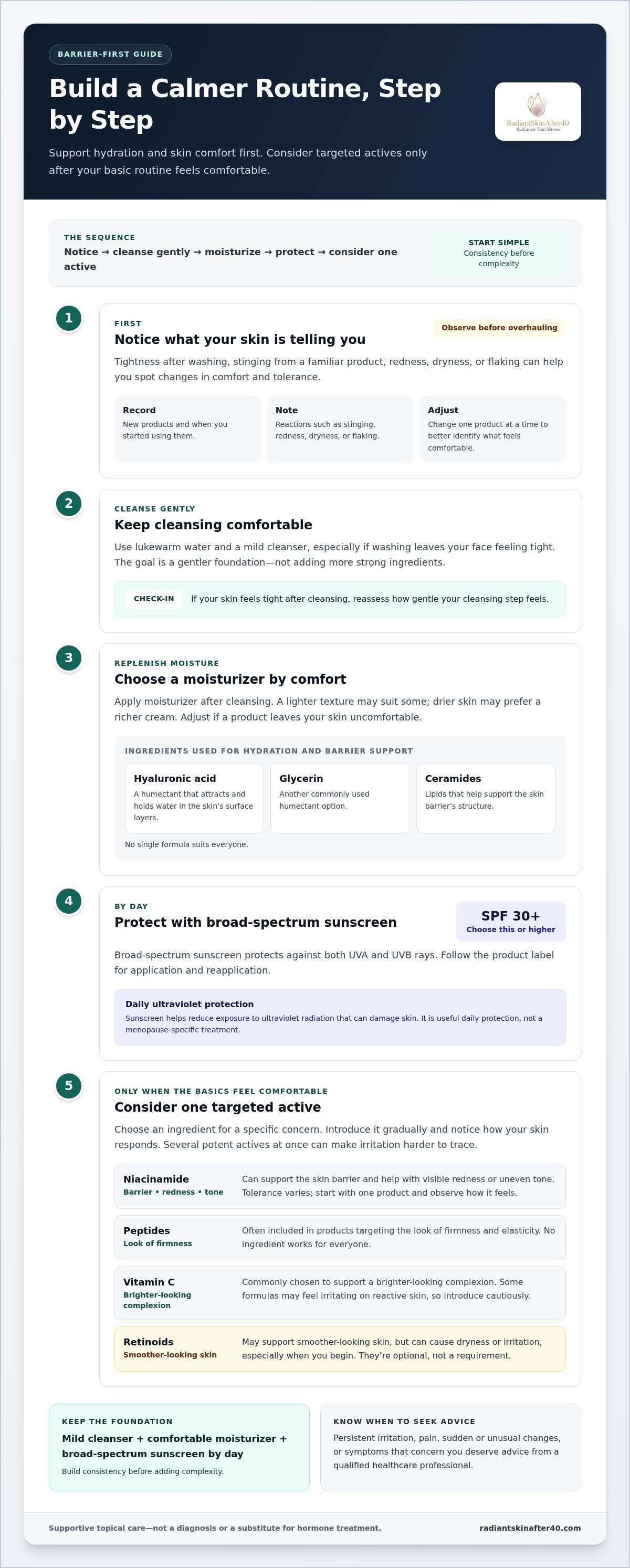
Notice what changes and when. Is your skin tight after washing, flaky in certain areas, or uncomfortable after applying a product you previously tolerated? Brief notes can reveal patterns and help you make deliberate adjustments instead of replacing your entire routine at once.
- Record new products and when you began using them.
- Note reactions such as stinging, redness, dryness, or flaking.
- Change one product at a time so you can better identify what your skin tolerates.
Skin can also change with the season, climate, and other routine shifts. Tracking these details gives you a clearer starting point for deciding what to simplify or adapt. If texture is a particular concern, explore this guide to improving skin texture after 40 for related care considerations.
Build a Stronger Skin Barrier Before Adding Actives
Your skin barrier is the outer layer that helps hold moisture in and shield skin from everyday irritants. If it feels dry or easily unsettled, start with the basics instead of layering several strong ingredients. A simple skincare routine for menopausal skin can begin with a mild cleanser, a comfortable moisturizer, and broad-spectrum sunscreen.
Cleanse gently, replenish moisture, and protect by day. Let consistency come before complexity. This barrier-first approach gives you a steady foundation and makes it easier to notice how your skin responds before you consider targeted actives.
Choose hydration and cleansing that feel comfortable
Use lukewarm water and a mild cleanser, especially if washing leaves your face tight. Humectants such as hyaluronic acid attract and hold water in the skin’s surface layers; glycerin is another commonly used option. Ceramides are lipids that help support the barrier’s structure. These ingredients can be useful, but no single formula suits everyone.
Choose a moisturizer by how it feels and how your skin behaves. A lighter texture may feel comfortable for some, while drier skin may prefer a richer cream. Apply it after cleansing and adjust if it leaves your skin uncomfortable. The National Institute on Aging’s guide to Skin Care and Aging offers broader guidance on caring for dry, aging skin and protecting it from sun damage.
Protect skin from daily ultraviolet exposure
Make broad-spectrum sunscreen a daytime step. Broad-spectrum products protect against both UVA and UVB rays, helping reduce exposure to ultraviolet radiation that can damage skin. Choose SPF 30 or higher, and follow the product label for application and reapplication. Sunscreen is useful daily protection, not a menopause-specific treatment.
If you use serums or skincare tools, consider how the products fit together and follow their directions. For example, guidance on serums for LED mask treatments can help you think through layering alongside an at-home device. Follow the device’s instructions, and keep cleansing, moisturizing, and sun protection as your foundation.
For a manageable starting point, explore moisturizers and serums for mature skin and consider which textures and hydration steps fit your routine.
Which Skincare Actives Suit Menopausal Skin?
Once your basic routine feels comfortable, a targeted active may help address a specific concern. Choose based on what you want to support and how your skin responds. Stronger formulas or more ingredients don’t automatically mean better results. Using several potent actives together can also make it harder to identify what is causing irritation.
Start with the purpose of each ingredient, then introduce it thoughtfully:
- Niacinamide: Can support the skin barrier and help with visible redness or uneven tone. Tolerance varies, so start with one product and observe how it feels.
- Peptides: Often included in products targeting the look of firmness and elasticity. They may suit you if those concerns matter, though no ingredient works for everyone.
- Vitamin C: Commonly chosen to support a brighter-looking complexion. Some formulas may feel irritating on reactive skin, so introduce cautiously.
- Retinoids: May support smoother-looking skin, but can cause dryness or irritation, especially when you begin. They’re optional, not a required step.
- Bakuchiol: Sometimes chosen as an alternative to retinoids. “Gentler” doesn’t mean reaction-free, so assess your own tolerance.
Retinoids and other targeted ingredients
Keep the approach measured. Add one active at a time, follow its product directions, and monitor your skin’s comfort before introducing another. If you’re considering a retinoid and have questions about whether it’s appropriate for you, seek guidance from a qualified healthcare professional. Your routine doesn’t need an active for every concern; a well-tolerated moisturizer and consistent care may be more useful for now.
Avoid starting multiple strong ingredients at once, such as a retinoid, exfoliating acid, and vitamin C in the same routine. If your skin is already unsettled, adding more steps can make it difficult to tell what’s helping and what isn’t.
When skin becomes more reactive
If burning or irritation begins after adding a product, pause the newest addition and simplify your routine to familiar, comfortable basics. Don’t push through persistent discomfort. Ongoing burning, a rash, or worsening symptoms should be assessed by a qualified healthcare professional; these signs alone can’t identify the cause.
A considered skincare routine for menopausal skin is built around your priorities and tolerance, not a fixed list of “must-use” actives. Let your skin’s response guide what stays, what changes, and what you leave out.
A Simple Morning and Evening Routine for Menopausal Skin
A useful routine should be easy to repeat and flexible enough to meet your skin where it is. Keep the essentials steady, then adjust the number of steps according to comfort. This skincare routine for menopausal skin separates daytime protection from evening cleansing and replenishment, without making serums or devices a requirement.
Morning: cleanse gently, moisturize, protect
- 1. Cleanse or rinse. If your skin feels comfortable and there’s little residue from the night before, a lukewarm-water rinse may be enough. Use a mild cleanser if you prefer a fresh cleanse or need to remove product residue. Avoid scrubbing.
- 2. Moisturize as needed. Apply a moisturizer that feels comfortable. If your skin is unusually dry, choose a richer texture or use enough to leave it feeling supple, not tight.
- 3. Apply sunscreen. Finish with broad-spectrum sunscreen, following the label for application and reapplication. This is your daytime protection step, whether or not you use a serum.
A serum can be an optional addition if it suits your goals and your skin tolerates it. Keep it secondary: a consistent cleanse or rinse, moisturizer, and sunscreen matter more than extra layers. If a product stings or leaves your skin uncomfortable, simplify rather than adding another step to compensate.
Evening: cleanse, replenish, and keep it simple
- 1. Remove the day. Gently cleanse away sunscreen, makeup, and daily residue. If one cleanse doesn’t comfortably remove what you’ve worn, use a suitable gentle approach rather than rubbing at the skin.
- 2. Moisturize. Replenish with a moisturizer that suits your skin’s current needs. On nights when your skin feels dry or reactive, make this the focus and skip optional actives.
- 3. Add targeted care only if comfortable. If your basic routine is working well, you may include one optional active according to its directions. Introduce it gradually and pause if irritation develops.
At-home LED is another optional step, not a replacement for cleansing, moisturizing, or sunscreen. If you’re considering an eye mask, read the at-home LED eye mask guide for device-use context, and follow the instructions supplied with your device.
Choose steps that feel sustainable. Explore moisturizers and serums to find skincare options that can fit a considered routine.
Personalize Your Menopausal Skincare Routine With Realistic Expectations
Your skin’s needs can shift with the season, indoor heating, climate, and product tolerance. Treat your routine as a flexible framework, not a fixed prescription. If your skin feels comfortable, keep the steps that work. If dryness or sensitivity increases, pare back optional products and focus on familiar, well-tolerated care. If your priorities change, adjust one step at a time so you can see how your skin responds.
Consistency can support hydration and comfort, but topical skincare can’t identify or treat every cause of a skin change. Results vary by person, product, and concern. Give a routine time to become manageable, and set goals around how your skin feels and looks rather than expecting a product to resolve every change associated with aging or menopause.
When an at-home LED mask may fit your routine
An LED face or eye mask may be an optional addition if it suits your preferences, but it isn’t a substitute for moisturizer or daytime sunscreen. Avoid assuming that a device will produce a particular clinical result. Use it only as directed, and review its instructions and safety guidance before adding it to your routine. For broader context on at-home beauty technology for mature skin, consider how any tool fits alongside your everyday essentials.
When skincare is not enough
Seek professional medical assessment for changes that are persistent, painful, rapidly changing, or otherwise concerning. A skincare routine can support daily care, but it can’t diagnose whether a symptom is hormonal or identify a dermatological condition. Getting an assessment is a sensible next step when a change doesn’t settle or causes concern.
Keep your next step simple: notice what your skin needs now, maintain the basics it tolerates, and add only what feels appropriate. A thoughtful skincare routine for menopausal skin can evolve without becoming complicated. If you’re considering products for at-home care, explore RadiantSkinAfter40’s skincare range at your own pace.
Let Your Routine Evolve With Your Skin
Menopause can change how skin feels, but your care doesn’t need to become complicated. Begin with a gentle, consistent foundation of cleansing, moisturizing, and daytime sun protection. Add targeted actives only when they suit your skin’s current needs, and introduce them gradually.
A thoughtful skincare routine for menopausal skin is personal. Adjust it as comfort, climate, and product tolerance change, and seek professional medical advice for persistent, painful, rapidly changing, or concerning symptoms. Topical care can support your skin, but it can’t diagnose or address every cause.
When you’re ready to explore at-home options, RadiantSkinAfter40 offers serums, moisturizers, skincare tools, and LED face and eye masks as optional additions to a considered routine. Explore at-home skincare and LED masks, and choose what feels right for you. Small, steady steps can help you care for your skin with confidence.
Frequently Asked Questions
Can menopause make your skin dry or sensitive?
Yes, menopause can coincide with changes in skin comfort, including dryness or increased sensitivity, though experiences differ. A gentle cleanser, moisturizer, and daily broad-spectrum sunscreen can provide a practical foundation. If a new reaction persists, becomes painful, or worsens, simplify your routine and seek advice from a qualified healthcare professional. Don’t assume hormones are the only possible cause of a change in your skin.
What is the best skincare routine for menopausal skin?
The best skincare routine for menopausal skin is one you can maintain and that feels comfortable. In the morning, cleanse gently or rinse, moisturize, and apply broad-spectrum sunscreen. In the evening, remove sunscreen and makeup, then moisturize. If your skin tolerates these basics, consider adding one targeted active gradually. Adjust according to comfort, and avoid changing several products at the same time.
Should I stop using retinol during menopause?
Not necessarily. Some people continue to tolerate retinoids, while others find their skin becomes drier or more reactive and choose to reduce use or pause. Adjust one product at a time, keep moisturizer in your routine, and don’t treat retinol as essential. If irritation persists or you’re unsure whether a retinoid suits your circumstances, seek guidance from a qualified healthcare professional.
Can I use vitamin C and retinol on menopausal skin?
Some people use both, but your skin’s tolerance matters more than following a complex routine. Introduce one active at a time and observe how your skin responds before adding another. If dryness or irritation develops, simplify your routine and return to gentle cleansing, moisturizer, and sunscreen. For persistent reactions or advice tailored to your health circumstances, consult a qualified healthcare professional.
How often should I exfoliate menopausal skin?
There’s no single exfoliation frequency that suits everyone, and exfoliation isn’t essential for every routine. If you choose to exfoliate, proceed cautiously and avoid introducing several potentially irritating products at once. Stop if discomfort develops, then return to gentle cleansing and moisturizing. Persistent irritation or unusual skin changes deserve professional assessment rather than repeated experimentation with exfoliating products.
Is an LED face mask necessary for menopausal skin?
No. An LED face mask is an optional at-home skincare tool, not a requirement. A manageable routine centered on gentle cleansing, moisturizer, and daytime sunscreen is a practical foundation. If you choose to use an LED face or eye mask, follow its instructions and keep expectations measured. A device doesn’t replace basic skincare or medical care for persistent or concerning symptoms.
When should I see a dermatologist about menopausal skin changes?
Consider seeing a dermatologist or another qualified healthcare professional if a skin change is persistent, painful, rapidly worsening, or concerning, or if a product reaction doesn’t settle after you simplify your routine. A dermatologist can assess symptoms that skincare guidance alone can’t diagnose. Don’t assume a new concern is caused by menopause, particularly if it changes quickly or significantly.