


The richest cream isn’t always the best hydrating moisturizer for mature skin. A lighter formula may feel more comfortable, while a richer texture may suit skin that feels persistently dry. The right choice depends less on age-based promises and more on how your skin feels and responds.
If tightness or dryness lingers after you apply face cream, consider whether the texture feels too light, whether your cleansing routine leaves skin uncomfortable, or whether a new product may not suit you. Hydration, moisturization, and barrier support are related, but they aren’t the same. Understanding the difference makes ingredient claims easier to assess.
This guide explains how to recognize what your skin may need, compare useful ingredients and textures, and choose a moisturizer that feels comfortable without overwhelming your routine. You’ll also learn how to introduce a formula and assess its fit. The aim is a thoughtful choice guided by your skin’s response, not age-based promises.
Key Takeaways
- Hydration, softening, and moisture sealing play different roles. Identify what your skin is asking for before choosing a formula.
- Compare humectants, emollients, and occlusives by function to make ingredient lists easier to understand.
- Choose a hydrating moisturizer for mature skin based on its texture and your skin’s response, not age-based packaging claims.
- Use a simple selection sequence: assess how your skin feels, choose a texture, review ingredients, and introduce the moisturizer gradually.
- A consistent routine can support skin comfort and a softer, less dry feel without relying on age-based promises.
What a Hydrating Moisturizer for Mature Skin Should Actually Do
A hydrating moisturizer for mature skin should help your skin feel more comfortable by attracting or adding water, softening the surface, and limiting moisture loss. These functions work together, but they aren’t identical. Hydration refers to water available in the outer skin layers. Moisturization describes how a formula helps skin feel softer and less dry, often by supporting the barrier that helps hold moisture in.
Age alone doesn’t determine the right formula. You may notice tightness and prefer a richer cream, or find that a light lotion feels more comfortable. Dryness, sensitivity, and changes in how skin responds to products can occur with age, but they aren’t universal. Pay attention to how your skin feels after cleansing and after applying moisturizer. Those observations are more useful than an age label on a jar.
Hydration, Moisturization, and the Skin Barrier
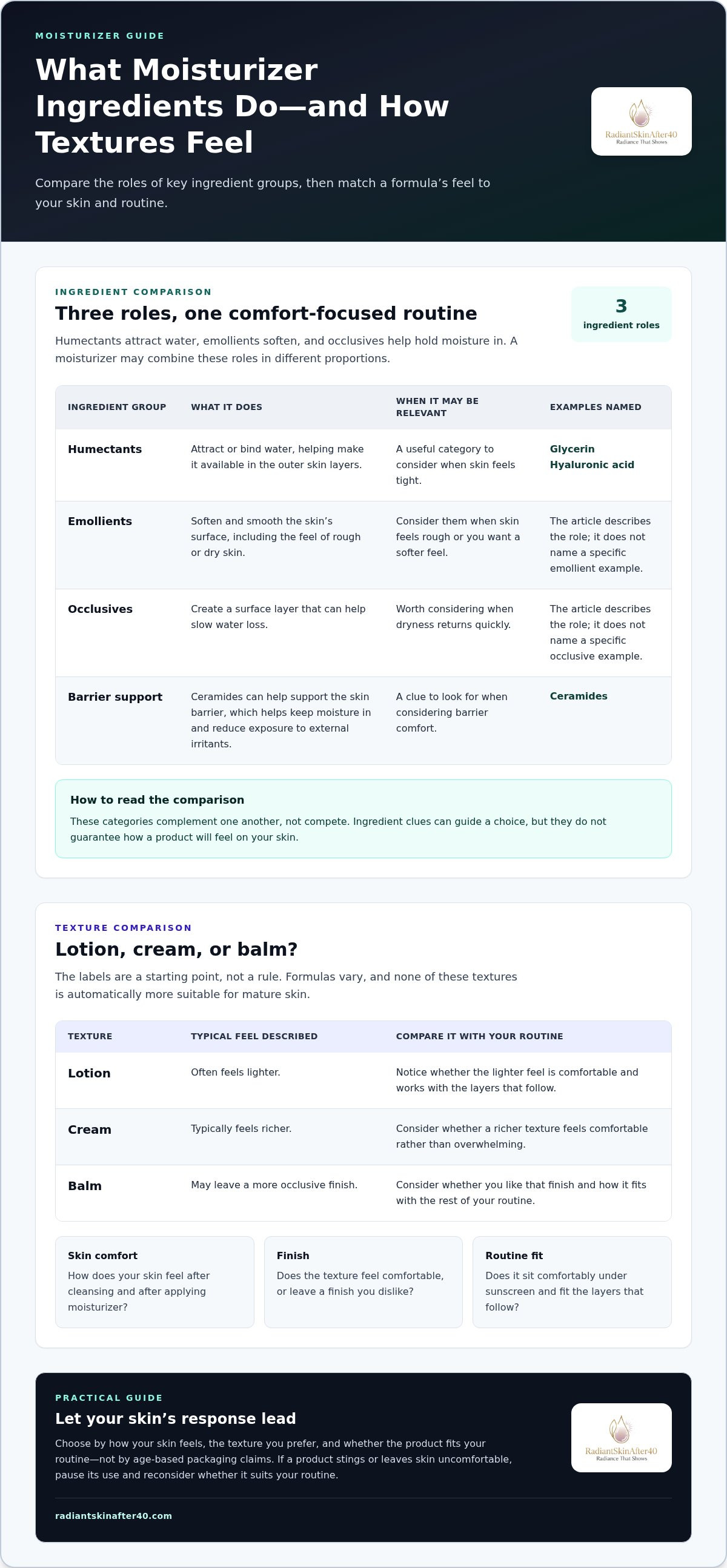
Humectants, such as glycerin and hyaluronic acid, attract water. Emollients help soften and smooth the skin by filling spaces between surface cells. Occlusive ingredients form a layer that can reduce water loss. A moisturizer may combine these roles in different proportions, which is one reason formulas can feel and perform differently. For a foundational overview of what moisturizers do, see how these ingredient categories work together.
The skin barrier is the outer protective layer that helps keep moisture in and reduce exposure to external irritants. Moisturizer can support barrier comfort, but it can’t address every cause of irritation or dryness. If a product stings or leaves your skin uncomfortable, pause its use and reconsider whether it suits your routine.
Why Mature Skin May Feel Drier or Less Comfortable
Some people find their skin feels drier or more reactive over time; others notice little change. Cold air, low humidity, and indoor heating can contribute to a tight feeling. Cleansing habits matter, too. Very hot water, frequent washing, or a cleanser that leaves skin feeling stripped may add to discomfort. Several new products introduced at once can also make it harder to identify what is affecting your skin.
A moisturizer’s role is to support skin comfort by softening the surface and helping limit moisture loss, not to reverse aging. Keep that realistic purpose in view as you assess a formula. Notice how your skin feels before and after application, whether the finish is comfortable, and whether the product fits easily into your routine.
Which Moisturizer Ingredients Support Mature-Skin Hydration?
Ingredient lists are easier to assess when you focus on what each ingredient does instead of expecting one “hero” ingredient to meet every need. A hydrating moisturizer for mature skin may combine ingredients that attract water with others that soften the surface or help reduce moisture loss. The balance varies by formula, and your skin doesn’t need every ingredient category to feel comfortable.
Humectants, Emollients, and Occlusives: What Is the Difference?
Humectants, including glycerin and hyaluronic acid, bind water and help make it available in the outer skin layers. Emollients soften and smooth the feel of rough or dry skin. Occlusives create a surface layer that helps slow water loss. Some ingredients can serve more than one role, and formulas may combine these categories in different ways.
Humectants attract water, emollients soften, and occlusives help hold moisture in. Think of these categories as complementary, not competing. A moisturizer with glycerin may feel different from one that emphasizes richer emollients, while ceramides can help support the skin barrier. No single combination is right for everyone.
How to Read a Moisturizer Ingredient List
Start with the concern you want to address. If skin feels tight, you might look for humectants. If it feels rough, a formula with softening emollients may appeal. If dryness returns quickly, ingredients that help reduce moisture loss may be worth considering. Ceramides are another ingredient to recognize for their role in supporting the barrier. These are useful clues, not guarantees of how a product will feel on your skin.
Front-label phrases such as “deep hydration” or “age-defying” don’t explain a formula’s balance. Scan the ingredient list for familiar examples, then consider the texture, your sensitivities, and how the product fits with the rest of your routine. Ingredient lists can inform your choice, but they can’t establish that a moisturizer will suit everyone. Skin changes with age in different ways; the National Institute on Aging offers an overview of how skin changes with age.
When comparing formulas, keep the goal practical: choose ingredients that match how your skin feels, then pay attention to your response with regular use. You can also explore moisturizers for mature skin as part of a considered skincare routine.
How to Compare Moisturizer Textures for Mature Skin
Texture affects how a moisturizer fits into your day. A formula can contain ingredients you like, but if it feels uncomfortable, sits poorly under sunscreen, or leaves a finish you dislike, you may be less inclined to use it consistently. Compare how it feels on your skin and works with the layers that follow, rather than choosing by age-related packaging claims.
Lotion, Cream, or Balm: Which Feel Suits Your Routine?
These labels offer a useful starting point, though formulas vary. A lotion often feels lighter, a cream typically feels richer, and a balm may leave a more occlusive finish. None is automatically more suitable for mature skin. Consider your preferred finish, your skin’s comfort, and whether makeup or sunscreen will go on afterward.
| Texture | Typical feel | When it may suit your routine |
|---|---|---|
| Lightweight lotion | Fluid and lighter on the skin | If you prefer a less noticeable finish or layer several products |
| Cream | More substantial and cushioning | If a lotion doesn’t feel comfortable enough, or you prefer a richer finish |
| Richer balm | Thicker and potentially more occlusive | If you enjoy a protective-feeling layer and don’t mind a heavier finish |
Climate can influence preference. Cold, dry weather or indoor heating may make a richer texture appealing, while warm or humid conditions can make a lighter lotion more comfortable. Consider your other routine layers, too. If a serum, sunscreen, or makeup already feels substantial, a lighter moisturizer may sit more comfortably beneath them. These are practical considerations, not fixed rules.
Does Mature Skin Always Need a Rich Cream?
No. Age alone doesn’t determine whether a rich cream is right for you. Dry skin may feel more comfortable with a substantial texture, while oily or combination skin may favor a lighter lotion. Sensitive skin can have its own preferences, so pay attention to how a formula feels during and after application rather than relying on its label.
For a hydrating moisturizer for mature skin, comfort is an important part of the choice. Notice whether the finish feels greasy, tight, or pleasant, and whether the product layers smoothly with the rest of your routine. Weather and indoor conditions can shift what feels right, so your preferred texture may change over time. If irritation or discomfort persists, seek advice from a qualified medical professional.
How to Choose and Use a Hydrating Moisturizer
A simple process makes moisturizer selection more deliberate and less driven by front-label promises. Start with how your skin feels, choose a comfortable texture, review the ingredients, and introduce the formula gradually. This helps you assess a hydrating moisturizer for mature skin in the context of your own routine, rather than against an age-based rule.
A Simple Moisturizer Selection Checklist
- Identify the main concern. Is your skin tight, flaky, sensitive, or uncomfortable after applying your current cream? Note when the feeling occurs and whether it changes with weather or other products.
- Choose a preferred texture. Consider how the formula feels on your skin and how it layers with serum, sunscreen, or makeup. If you dislike a heavy finish, a richer texture may be difficult to use consistently.
- Review the ingredients. Check for ingredients you know your skin doesn’t tolerate, and consider ingredient roles instead of relying on age-related packaging claims.
- Introduce it gradually. Patch test a new formula according to its label directions, then begin using it as directed. A patch test can be useful, but it can’t guarantee that a product won’t cause a reaction.
Keep the rest of your routine steady while trying a new moisturizer. Changing one product at a time makes it easier to notice how your skin responds. For broader routine context, explore this skin texture guide for adults over 40.
Where Moisturizer Fits in a Day and Night Routine
Keep the order straightforward: cleanse, apply compatible treatment products such as serum, then moisturize. In the morning, finish with sunscreen according to its label directions. Moisturizer doesn’t replace daytime sun protection. At night, cleanse, apply compatible treatments, and follow with moisturizer.
Use products consistently and as directed on their labels. Notice whether your skin feels more comfortable, while keeping expectations realistic: a moisturizer can support a softer, less dry feel, but it can’t promise to resolve every skin concern. If a product causes persistent irritation or discomfort, stop using it and seek qualified medical advice.
To put these selection criteria into practice, browse moisturizers for mature skin and consider how a comfortable formula could fit into your daily routine.
Finding a Hydrating Moisturizer for Mature Skin That Fits Your Routine
A considered choice brings together four things: your skin’s hydration needs, a comfortable texture, ingredients your skin tolerates, and a routine you can maintain. A hydrating moisturizer for mature skin doesn’t need to be the richest formula or the one with the longest ingredient list. It needs to suit your skin’s present needs and feel practical to use.
Keep the goal realistic. Moisturizer can support skin comfort and help skin feel softer and less dry. Hydration alone doesn’t establish that a formula will reduce the appearance of wrinkles, improve firmness, or create lasting change in other skin concerns. Those outcomes depend on the product and the evidence supporting its specific claims. Focus on how your skin feels and whether the formula fits comfortably into your routine.
What Results Can You Realistically Expect?
With regular, label-directed use, you may notice a more comfortable feel or less surface dryness. The experience varies with the formula, how you use it, and your individual skin. A texture that feels pleasant to one person may feel heavy or insufficient to another. Let your skin’s response guide your judgment rather than expecting a dramatic or permanent transformation.
If dryness, irritation, or another skin symptom persists or concerns you, seek medical guidance. A moisturizer can be a supportive part of care, but it isn’t a substitute for evaluating ongoing symptoms.
Build a Composed Routine Around Your Moisturizer
Let your priorities shape the routine. If your main concern is dryness, begin with a moisturizer that feels comfortable and use it consistently as directed. Add other products only when they serve a clear purpose for you. Serums and skincare tools can be optional parts of a broader routine; they don’t replace moisturizer. Keeping the routine focused also makes it easier to notice which products feel suitable.
RadiantSkinAfter40 brings skincare and beauty technology for mature skin together in one place, including moisturizers, serums, and skincare tools. Once you have a sense of the texture and routine that suit you, explore RadiantSkinAfter40 skincare as you consider your next step. Choose with care, keep expectations grounded, and let comfort be a meaningful guide.
Choose Comfort, Build Consistency
The right hydrating moisturizer for mature skin is one that fits your skin’s current needs, feels comfortable, and works with the rest of your routine. Focus on ingredient roles and texture rather than age-based promises. A moisturizer can support a softer, less dry feel, while realistic expectations help you judge whether a formula suits you.
Keep your routine simple and pay attention to how your skin responds. Your preferences may shift with the season or with changes in your skin, so choosing a moisturizer can be an ongoing, thoughtful process rather than a permanent decision.
RadiantSkinAfter40 offers skincare and beauty technology for mature skin, with moisturizers and serums alongside skincare tools. Explore skincare for mature skin and consider what could complement your routine.
Small, considered choices can make daily skincare feel more comfortable. Let your skin’s needs guide the next step.
Frequently Asked Questions
What is the best hydrating moisturizer for mature skin?
The best hydrating moisturizer for mature skin is one that suits your skin’s current needs, feels comfortable, and fits your routine. If your face feels tight or dry, consider whether you prefer a richer cream or a lighter lotion, then review the ingredients for roles such as attracting water or softening skin. Age alone doesn’t determine the right formula. Introduce a new moisturizer gradually and follow its label directions.
Are cream moisturizers better than lotions for mature skin?
No, creams aren’t automatically better than lotions for mature skin. Creams typically feel richer, while lotions tend to feel lighter, but formulas vary. Dry skin may feel more comfortable with a cream, while oily or combination skin may prefer a lotion. Consider your skin’s comfort, the finish you like, the climate, and whether sunscreen or makeup will follow. Choose a texture you can use comfortably and consistently.
Which ingredients should I look for in a moisturizer for mature skin?
Look for ingredients by function, then consider your skin’s preferences and sensitivities. Glycerin and hyaluronic acid are humectants that attract water. Emollients help soften skin, while occlusives help reduce moisture loss. Ceramides can support the skin barrier. A formula doesn’t need every ingredient to be suitable for you, and an ingredient list can’t predict everyone’s response. Pay attention to the formula’s overall feel and follow label directions.
Can a moisturizer help with wrinkles on mature skin?
A moisturizer can soften dry skin and may make fine lines caused or emphasized by dryness appear less noticeable while skin feels hydrated. It shouldn’t be expected to erase wrinkles, permanently change skin, or improve firmness simply because it’s labeled “anti-aging.” Claims about those outcomes depend on the specific product and supporting evidence. For ongoing skin concerns, or symptoms that persist or cause discomfort, seek advice from a qualified medical professional.
How often should mature skin use moisturizer?
Use moisturizer as directed on its label and adjust your routine to your skin’s comfort. Many routines include moisturizer after cleansing in the morning and evening, but the right frequency depends on the formula and your needs. In the daytime, apply sunscreen after moisturizer; moisturizer doesn’t replace sun protection. If your skin becomes irritated or uncomfortable, stop using the product and seek medical guidance if symptoms persist.
Should I apply serum or moisturizer first?
In a straightforward routine, apply serum after cleansing and before moisturizer. Serum is a treatment layer, while moisturizer follows as a distinct step in your routine. Use compatible products according to their labels, and introduce new formulas gradually so you can notice how your skin responds. In the morning, apply sunscreen after moisturizer. If product directions specify a different order, follow the instructions for those products.
Can mature skin be both oily and dehydrated?
Yes. Oily skin can still feel dehydrated, which refers to a lack of water in the outer skin layers rather than a lack of oil. You might notice shine alongside tightness or a less comfortable feel. A lighter-texture moisturizer may suit your preference, but focus on how your skin responds rather than assuming oily skin needs no moisturizer. If persistent irritation or discomfort concerns you, seek qualified medical advice.