


What makes the best hydrating night cream for aging skin? It may not be the richest one on the shelf, but the one your skin feels comfortable using consistently. A cream that feels too heavy or irritating can make a routine harder to maintain, while waking with tight skin may leave you wondering whether your moisturizer is enough.
Mature skin can feel drier, making hydration and barrier support practical priorities. You don’t need dramatic overnight promises to care for it well. Focus on a comfortable formula that suits your skin and helps ease dryness and tightness.
This guide explains what hydration and barrier support can realistically do, which ingredient types to look for, and how to choose a texture that feels right. You’ll also find a simple evening routine to help you make a thoughtful choice and use it consistently, without adding unnecessary steps.
Key Takeaways
- A hydrating night cream can help reduce overnight moisture loss, but mature skin’s needs vary from person to person.
- Humectants, emollients, and occlusives serve different roles in supporting skin comfort.
- Choose a hydrating night cream for aging skin by considering texture, climate, and how your skin feels, not by following a one-size-fits-all rule.
- Keep application simple: cleanse gently, apply compatible treatments, then moisturize with an amount that feels comfortable.
- Use your skin’s cues to adjust your routine, prioritizing consistency and comfort over frequent product changes or overnight promises.
Why Hydration Matters in a Night Cream for Aging Skin
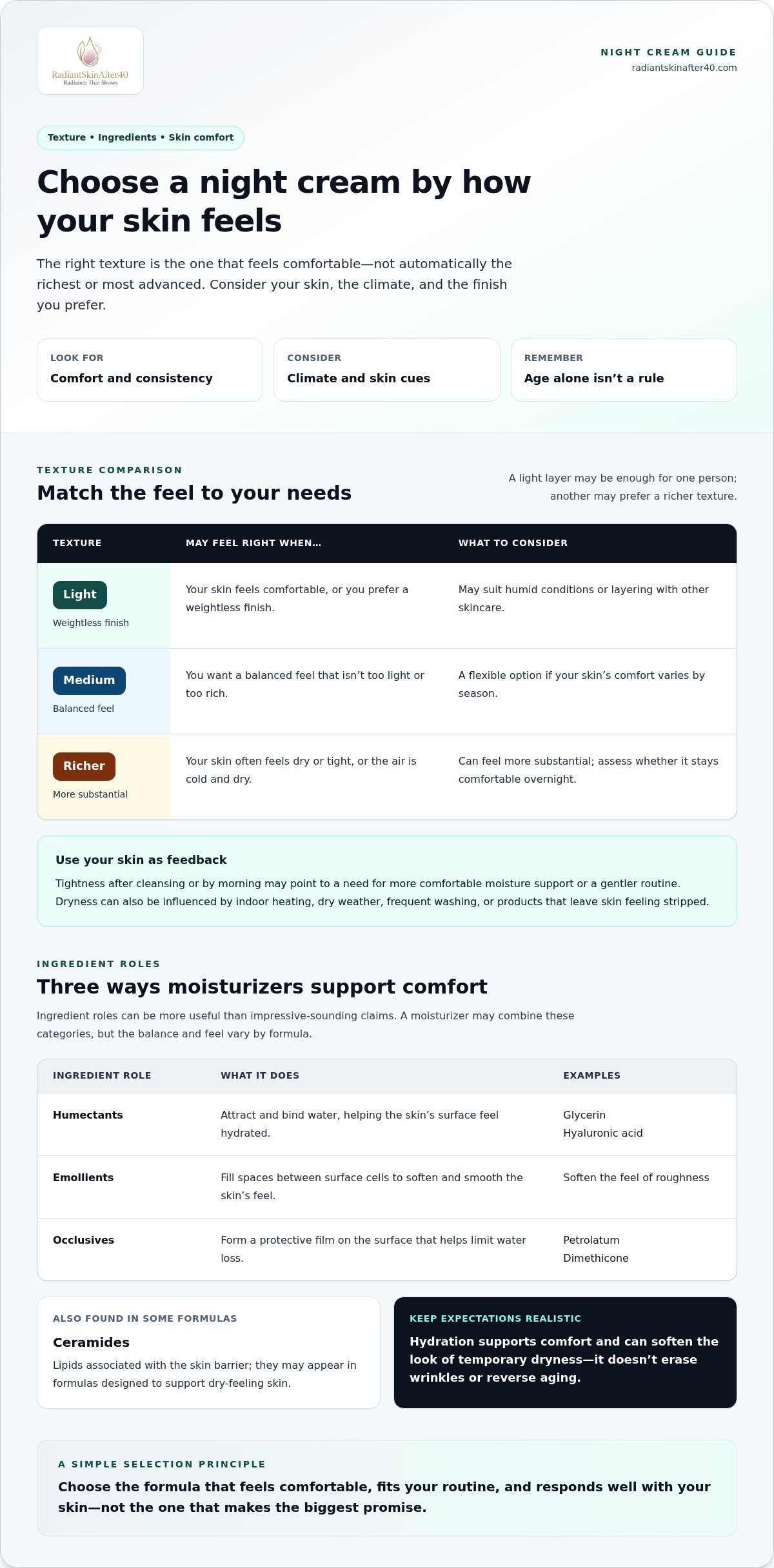
A hydrating night cream is a moisturizer applied before bed to help reduce overnight moisture loss and keep skin feeling soft and comfortable. Mature skin may feel drier or tighter than it once did, but age alone doesn’t determine what your skin needs. A light layer may be enough for one person; another may prefer a richer texture.
Moisturizers support hydration in different ways, helping skin retain water or reducing moisture loss from the surface. For a useful foundation on what moisturizers do, remember that “hydrating” describes support for moisture and comfort, not a promise to reverse visible signs of aging.
Hydration supports skin comfort and softens the look of temporary dryness; it doesn’t erase wrinkles or reverse aging. Keeping that distinction in mind makes it easier to choose a hydrating night cream for aging skin. Look for a moisturizer that feels comfortable and fits your routine rather than expecting an overnight transformation.
Why skin may feel drier as it matures
Skin’s moisture balance and comfort can change with age, so dryness may become more noticeable for some people. These changes aren’t universal, and they don’t mean everyone needs a heavier cream. Indoor heating, dry weather, frequent washing, and products that leave skin feeling stripped can also contribute to tightness. Consider your routine and environment, not age alone.
If your skin feels tight after cleansing or by morning, treat that sensation as useful feedback. It may indicate a need for more comfortable moisture support or a gentler routine.
What a night cream can and cannot do
A night cream can help skin feel softer and less tight by supporting moisture at the surface. As dryness feels less noticeable, skin may look smoother. Results depend on the person and the formula, so focus on how your skin responds rather than expecting a change by a set date.
Moisturizer won’t remove wrinkles, restore every age-related change, or replace medical care. If dryness is persistent, painful, or accompanied by irritation, a cream may not address the underlying cause. Set a realistic goal: a comfortable-feeling complexion and a routine you can maintain.
How Hydrating Night Cream Ingredients Support the Skin Barrier
The skin barrier is the outer layer that helps keep moisture in and irritants out. Think of it as a protective seal. When it’s functioning well, skin is more likely to feel comfortable; when it’s disrupted, dryness or sensitivity may become more noticeable. Skin can change with age, though individual experiences differ. The National Institute on Aging offers more context on how aging affects skin.
When choosing a hydrating night cream for aging skin, ingredient roles can be more useful than impressive-sounding claims. Humectants, emollients, and occlusives each support moisture in a different way.
Humectants, emollients, and occlusives explained
- Humectants, such as glycerin and hyaluronic acid, attract and bind water, helping the skin’s surface feel hydrated.
- Emollients soften and smooth the skin’s feel by filling spaces between surface cells, which can make roughness feel less pronounced.
- Occlusives form a protective film on the surface that helps limit water loss. Petrolatum and dimethicone are examples commonly used for this purpose.
Humectants attract water, emollients soften the surface, and occlusives help slow moisture loss. Together, these roles can support a more comfortable skin barrier. A moisturizer may combine these categories, but the balance and feel vary by formula.
Which ingredients may suit dry or sensitive-feeling skin?
Glycerin and hyaluronic acid are humectants you may see in moisturizers. Ceramides are lipids associated with the skin barrier and may appear in formulas designed to support dry-feeling skin. Their presence alone doesn’t guarantee a particular result, and no single ingredient works identically for everyone.
Read the full ingredient list instead of choosing by one highlighted component. Consider how the formula feels, whether it leaves your skin comfortable, and whether you’ve reacted to any ingredients before. If your skin tends to feel sensitive, introduce a new moisturizer thoughtfully and watch for discomfort.
The overall formula and texture matter, too. A moisturizer with humectants may feel light, while one with richer emollients or occlusives may feel more protective. Neither is automatically better. Let your skin’s response guide your choice, and keep your routine simple enough to follow consistently. You can explore moisturizers for mature skin when considering options for your evening routine.
How to Choose a Night Cream for Aging Skin: Texture and Needs
The right texture is the one that leaves your skin comfortable, not necessarily the one that seems richest or most advanced. Consider how your skin feels by bedtime and in the morning, the climate you live in, and whether you prefer a light finish or a more substantial layer. A hydrating night cream for aging skin should fit your needs and routine, not an age-based rule.
| Texture | May feel right when | Consider |
|---|---|---|
| Light | Your skin feels comfortable or you prefer a weightless finish. | May suit humid conditions or layering with other skincare. |
| Medium | You want a balanced feel that isn’t too light or too rich. | A flexible option if your skin’s comfort varies by season. |
| Richer | Your skin often feels dry or tight, or the air is cold and dry. | Can feel more substantial; assess whether it remains comfortable overnight. |
Lightweight lotion or richer cream: what feels right?
Texture is a matter of preference and context. A lighter lotion may feel pleasant in warm, humid weather or if you dislike residue. A richer cream may feel more comforting in dry conditions, but thickness alone doesn’t make a moisturizer more effective or suitable. After applying, notice whether your skin feels soft and at ease, coated or uncomfortable, or still tight.
How to assess labels and potential irritants
Scan the full ingredient list, especially if you know certain ingredients or fragrance tend to bother your skin. A highlighted ingredient doesn’t tell the whole story: the overall formula and your personal tolerance matter. Active ingredients elsewhere in your routine may also affect how your skin responds. Avoid introducing several new products at once. Add one at a time and observe how your skin feels before making another change.
Choose for comfort, consistency, and your needs, not age alone. If roughness or uneven surface texture is also on your mind, read this guide to improving skin texture after 40 for related routine considerations.
How to Apply Night Cream Without Overloading Your Skin
An evening routine doesn’t need many layers. Apply products in a simple order, use an amount that feels comfortable, and let your skin’s response guide adjustments. If the moisturizer’s directions specify a different method, follow them.
A simple evening application sequence
- Cleanse gently. Use a cleanser that leaves your skin feeling comfortable, not tight or stripped. Pat your face dry rather than rubbing.
- Apply leave-on treatments. If you use serums or other treatments, follow their directions and your established routine. Avoid adding several unfamiliar products at once.
- Moisturize. Smooth a comfortable amount of cream over your face and neck using light strokes. There’s no universal amount. Add a little more only if your skin still feels dry, and use less if the finish feels heavy.
Some people find moisturizer more comfortable on slightly damp skin, and it may spread more easily. Skin should be damp, not dripping. If the formula’s instructions say to apply it to dry skin, follow the label.
Layering with retinoids and other active ingredients
Some active ingredients, including retinoids, can leave skin feeling dry or irritated for some users. If your routine includes an active treatment, follow its directions and pay attention to your skin’s response. A moisturizer may make your routine feel more comfortable, but it can’t guarantee that irritation won’t occur or that every combination will suit you.
Make changes gradually. Introducing multiple new products at once makes it difficult to identify what your skin tolerates. Add one new product at a time, patch test it according to its directions, and observe your skin before changing another step. If persistent irritation develops, pause use. Seek medical guidance if symptoms continue or concern you.
The best hydrating night cream for aging skin is useful only if it fits comfortably into your routine. Consistent, gentle application matters more than applying a thick layer or adding unnecessary steps. If your skin feels overloaded, simplify. If it feels tight, review both your moisturizer and the products used before it.
To make moisturizing part of your evening ritual, explore skincare moisturizers for mature-skin care.
Build a Consistent Hydrating Night-Care Ritual
A night routine works best when it feels easy to repeat. Rather than changing products in pursuit of an overnight transformation, give a comfortable routine time to become familiar and notice how your skin feels from evening to morning. A hydrating night cream for aging skin can support comfort without promising dramatic change.
A low-fuss routine you can sustain
Keep the foundation simple: cleanse gently, apply any familiar leave-on treatment as directed, then use a comfortable layer of moisturizer. Notice tightness, softness, stinging, or heaviness. These cues can help you make measured adjustments instead of reacting to small day-to-day changes or frequently replacing products.
- If skin feels tight: Consider whether your cleansing step feels too drying or whether your moisturizer feels comfortable and sufficient.
- If skin feels comfortable: Keep the routine steady. There’s no need to add another product simply because it’s marketed as an overnight solution.
- If skin feels overloaded: Simplify by pausing recently added products and returning to familiar, comfortable steps.
Moisturizer is one part of skin care, not a substitute for daytime sun protection. Keep sun protection in your morning routine, following the directions on the product you use. A calm evening ritual and thoughtful daytime habits serve different purposes.
When dryness may need a different kind of support
Occasional tightness can be a cue to reassess your routine, but persistent, painful, worsening, or notably irritated skin deserves more than a product adjustment. Pause products that seem to aggravate discomfort, and seek qualified medical guidance for ongoing symptoms or concerning skin changes. Retail skincare can support a personal routine, but it isn’t a replacement for medical care.
Consistency doesn’t mean ignoring your skin’s signals. It means keeping the routine simple enough to notice what feels comfortable, making changes thoughtfully, and avoiding pressure to chase instant results. If dryness continues despite a gentle routine, a clinician can help assess possible causes and appropriate next steps.
For an option to consider as part of your evening ritual, explore RadiantSkinAfter40’s moisturizer category and choose according to your comfort and preferences.
Make Comfort the Measure of Your Routine
The best hydrating night cream for aging skin is one that supports moisture and feels comfortable enough to use consistently. Choose a texture according to your skin’s needs, and look beyond a single highlighted ingredient: the overall formula and your personal tolerance matter. A gentle, repeatable evening routine can be more useful than frequent product changes or promises of dramatic overnight results.
Hydration is a practical form of care, not a way to reverse aging. Let your skin’s comfort guide small adjustments, and seek qualified medical guidance if irritation or dryness persists.
RadiantSkinAfter40 offers skincare and beauty technology for mature skin, including moisturizers, serums, and LED face and eye masks for at-home routines. Explore skincare essentials for mature skin as you shape a routine that feels considered and sustainable.
Keep it simple: choose comfort, stay consistent, and let your evening ritual support your skin with care.
Frequently Asked Questions
What is the best hydrating night cream for aging skin?
There’s no single best hydrating night cream for aging skin because comfort and tolerance differ from person to person. Look for a texture that suits your skin and ingredients that support hydration, such as humectants, emollients, or occlusives. Consider dryness, sensitivity, your current routine, and known triggers. Introduce a new formula gradually, then assess how your skin feels with consistent use rather than expecting dramatic overnight results.
Can a night cream reduce wrinkles on aging skin?
A hydrating cream can soften the look of temporary dryness and make skin feel more comfortable, which may make fine lines appear less pronounced for a time. It doesn’t erase wrinkles or reverse the natural aging process. Keep expectations focused on moisture and skin feel. If you’re concerned about wrinkles or changes beyond dryness, consider evidence-based treatments and seek qualified professional advice about options suited to your needs.
Should I use a richer night cream as my skin ages?
Not necessarily. A richer cream may feel comforting if your skin feels dry, while a lighter formula may suit you if you dislike a heavier finish. Age alone doesn’t determine the right texture. Consider your skin’s current comfort, the surrounding climate, and the other products in your routine. Choose a moisturizer you can apply consistently without feeling greasy or experiencing irritation.
How should I apply night cream for dry, mature skin?
After gentle cleansing, apply any leave-on products that suit your routine, then smooth on a comfortable amount of moisturizer. Follow the product directions and use light strokes rather than tugging at your skin. If the cream is new to you, introduce it gradually and observe how your skin responds. Simplify your routine if irritation or persistent discomfort develops, and seek qualified guidance if symptoms continue.
Can I use night cream with retinol?
Many routines include both moisturizer and retinol, but individual tolerance varies. Retinol can cause dryness or irritation for some people, so follow its product directions and introduce changes gradually rather than starting several new products at once. A moisturizer may support skin comfort, but it can’t guarantee that irritation won’t occur. If irritation persists, pause use and seek qualified advice about next steps.
Are fragrance-free night creams better for sensitive skin?
A fragrance-free option may be worth considering if fragrance is a known personal trigger, but the label doesn’t guarantee that a product will suit every sensitive skin type. Review the full ingredient list, patch test when appropriate, and introduce one new product at a time so you can notice how your skin responds. Stop using a product if it causes persistent irritation or discomfort.
Should I apply night cream to damp or dry skin?
Either can work, depending on the product directions and what feels comfortable. Some people prefer applying moisturizer to slightly damp skin after cleansing, while others let their skin dry first, especially if they use treatments that may irritate them. Avoid applying cream to dripping-wet skin. Follow the directions for each product in your routine, since they may specify when and how to apply it.