


The most elaborate device isn’t necessarily the most useful one. The right professional skincare tools for home use depend on what you want to address, how the tool works, and whether it fits comfortably into your routine. LED masks, electrical-current devices, cleansing tools, and simple manual applicators have different purposes, so choosing one can feel less like self-care and more like guesswork.
It’s sensible to consider whether a costly or complicated tool will earn a place in your routine. Its technology and intended purpose matter, as do ease of use, safety guidance, and the quality of evidence behind its claims. Mature skin deserves thoughtful care, not pressure to follow every new trend.
This guide compares at-home tool categories by purpose, evidence, and practicality, so you can weigh potential benefits against the commitment each requires. We’ll look at LED face and eye masks alongside other device and manual options, then cover how to choose an addition that complements your skincare essentials without overcomplicating your routine.
Key Takeaways
- Learn how professional skincare tools for home use differ by purpose, from powered devices to simple manual implements.
- Compare tool categories by their intended role, routine fit, and limitations rather than by bold marketing claims.
- Understand why device instructions and safety guidance matter, especially for powered tools with specific precautions.
- Use a simple decision sequence to narrow your options: define your goal, choose a category, assess the routine fit, and review instructions.
- Explore LED face and eye masks as one option for a considered skincare routine alongside serums and moisturizers.
What Makes a Skincare Tool Professional-Style for Home Use?
Professional-style skincare tools for home use are devices or implements designed to perform a focused skincare function, such as delivering light or providing a physical action at home. The term describes a tool’s purpose and design, not a guarantee of results equivalent to a professional treatment. A home LED face mask, for example, is a device category. Its features and appropriate use depend on the specific product.
Tools differ from skincare products. Serums, moisturizers, and body care are topical formulations applied to the skin. A tool uses a physical or light-based modality instead. Both can have a place in a routine, but a device doesn’t replace basic care. Its role and potential outcome depend on the tool, its instructions, and consistent, appropriate use.
How skincare tools differ from creams and serums
Think of a topical as something you apply and a tool as something you use. A manual applicator involves direct contact; a powered device may use light, vibration, or another form of energy. LED masks are one example of a light-based category. For general background on how light therapy is described and applied, see Light Therapy (Phototherapy). That overview doesn’t establish the effectiveness of any particular skincare device.
A considered routine can stay simple: cleanse, apply suitable skincare, and use a tool only if its purpose and directions fit. Don’t assume a device works better when paired with more products or used more often than instructed. Follow the product guidance and pay attention to how your skin responds.
Why mature skin calls for thoughtful tool choices
Skin needs and tolerance can change over time, but age alone doesn’t determine which tool is right for you. Comfort and simplicity matter. A device with several features may sound appealing, but a straightforward option that fits your habits may be easier to use consistently.
Before adding a tool, consider whether its function matches a goal you actually have, whether the steps feel manageable, and whether its instructions suit your routine. Introduce one new tool at a time so you can notice how it fits alongside your existing serums and moisturizers. The aim isn’t to reverse age or pursue every trend. It’s to make a measured choice that supports a routine you can maintain.
At-Home Skincare Tool Types: What Each One Is Designed to Do
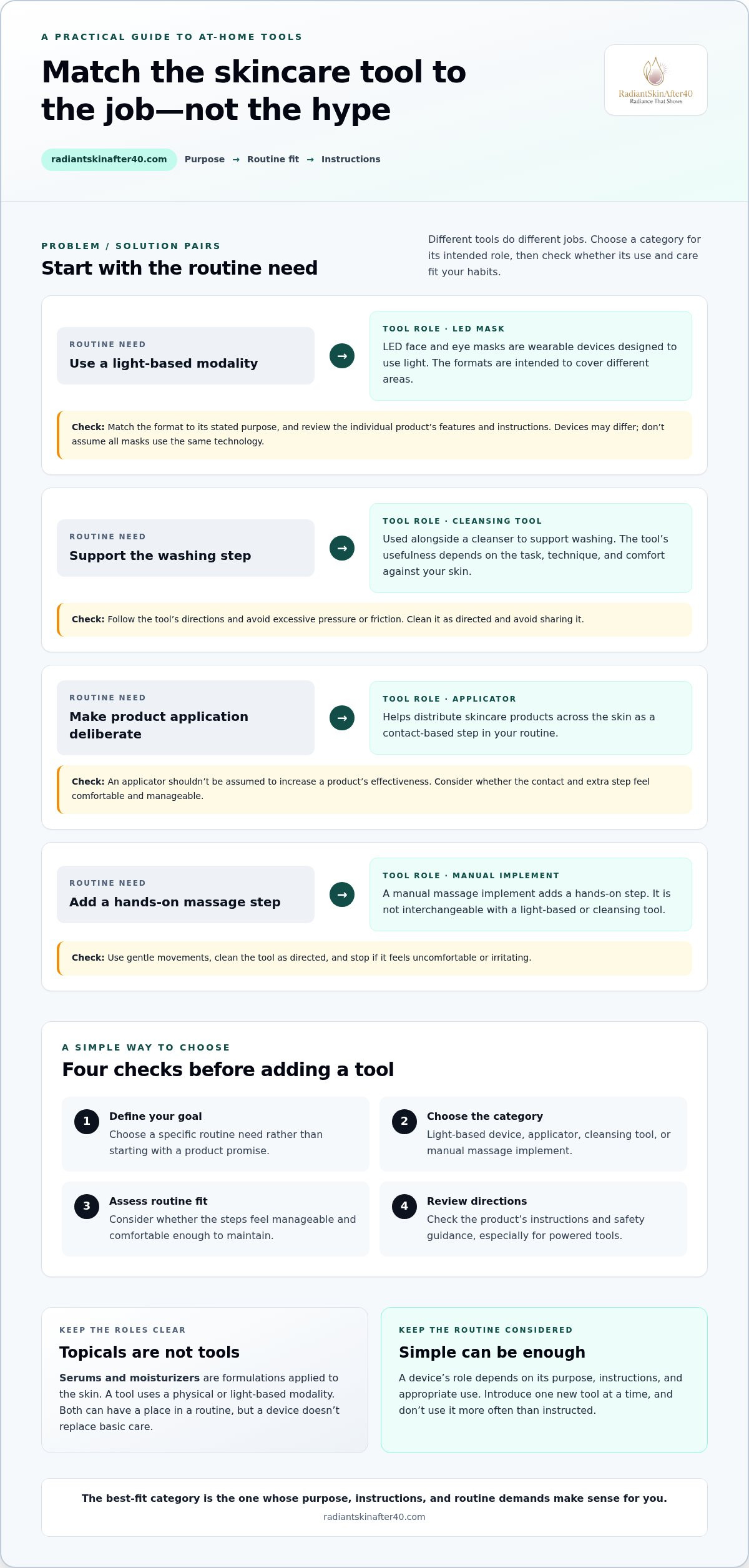
Each skincare tool category serves a different routine need: light-based devices deliver light, cleansing tools support washing, applicators help spread products, and manual massage implements add a hands-on step. These functions aren’t interchangeable, and none is automatically the best choice for every person or concern.
LED masks and light-based skincare devices
LED masks are wearable devices that use light as their intended modality. Face masks and eye masks differ in the area they’re designed to cover, so consider which format suits your routine and the device’s stated purpose. Don’t assume all masks use the same technology or have the same features. Check the individual product’s instructions and specifications rather than relying on claims about another device.
An LED face or eye mask can be considered alongside skincare essentials such as serums and moisturizers, not as a replacement for them. For a closer look at considerations for the eye-area format, read this at-home LED eye mask guide. RadiantSkinAfter40 offers LED face and eye masks as options in this category. Compare the details of each product rather than treating all light-based devices as equivalent.
Applicators, cleansing tools, and manual massage implements
Contact-based tools serve practical roles in a routine. Their usefulness depends on the task, your technique, and whether the tool feels comfortable against your skin.
- Applicators: These help distribute skincare products across the skin. They can make application more deliberate, but shouldn’t be assumed to increase a product’s effectiveness.
- Cleansing tools: These are used alongside a cleanser to support the washing step. Follow the tool’s directions and avoid excessive pressure or friction.
- Manual massage implements: These add a hands-on massage step. Use gentle movements and stop if the sensation feels uncomfortable or irritating.
Because these tools touch the skin, hygiene matters. Clean them as directed, avoid sharing them, and don’t use them in ways that cause discomfort. Even a simple tool needs suitable technique and care. If a format feels difficult to use consistently, it may not be the right fit for your routine.
When comparing professional skincare tools for home use, start with the function you want rather than the most feature-rich device. If LED is the category that fits your goal, explore LED face and eye masks as one possible addition to a considered routine.
How to Compare Professional Skincare Tools Without Buying Into Hype
A useful comparison starts with a clear goal, not a promise on the packaging. Decide whether you want a light-based device, help applying products, a cleansing step, or a manual massage implement. Don’t assume one tool can address every visible skin concern. For broader context on mature-skin routines, see this guide to improving skin texture after 40.
Match the tool to a specific skincare goal
Use the table to compare each category by its everyday role and practical trade-offs. It isn’t a ranking of effectiveness. Consider whether the tool’s function matches your priority and whether its care instructions fit your habits.
| Tool category | Intended role | Routine fit | Key limitations |
|---|---|---|---|
| LED face or eye mask | Provides a light-based skincare step | Requires setting aside time to use the device as directed | Coverage and specifications vary by product; claims for one device don’t establish results for another |
| Product applicator | Helps spread a topical product | Can fit alongside serums or moisturizers | Supports application, but shouldn’t be assumed to improve a product’s effects |
| Cleansing tool | Assists with the cleansing step | Adds a tool to washing and cleaning routines | Requires appropriate technique and care; contact may not suit every preference |
| Manual massage implement | Adds a hands-on massage step | Can be used as a brief, manual routine step | Results and comfort depend on technique and skin tolerance |
Assess evidence, usability, and routine compatibility
Separate a manufacturer’s claim from what independent research has established. Look for evidence that addresses the same technology, intended use, and outcome being promoted. A general claim about a tool category doesn’t prove that every product in it performs identically. Treat broad language such as “professional results” as a reason to examine the device’s stated purpose and supporting evidence, not as a guarantee.
Then consider practical details: setup, cleaning, storage, skin contact, and how often the instructions call for use. A tool that’s awkward to handle or difficult to maintain may be less suitable than a simpler option. Check each product’s specifications and safety guidance individually. Don’t transfer instructions from one device to another.
These criteria can help you make a considered choice without turning skincare into a research project. If an LED face or eye mask aligns with your goal and routine, explore LED skincare options as one possible addition.
Are Professional Skincare Tools Safe for Home Use?
Professional skincare tools for home use aren’t automatically suitable for everyone simply because they’re designed for consumers. Safe use depends on the specific tool, its instructions, and your circumstances. A manual massage implement has fewer operating steps than a powered LED device, but any tool that touches the skin still calls for appropriate technique and hygiene. Powered tools may have additional precautions, so don’t assume guidance for one device applies to another.
What to check before using a skincare device
Before first use, read the manufacturer’s instructions from start to finish. Review warnings, cleaning directions, and guidance on who should avoid using the device or take extra care. For light-based tools, check instructions about eye exposure and photosensitivity. If you take medication or have an underlying condition that could affect device use, seek advice from a qualified healthcare professional rather than guessing.
- Confirm how the device should be prepared, positioned, and operated.
- Follow the product’s cleaning and storage guidance.
- Check all stated contraindications and warnings, including those related to your skin or health circumstances.
- Don’t use a damaged tool or improvise beyond its directions.
These steps matter for LED face and eye masks as well as other powered devices. Specifications and safety guidance are product-specific, so rely on the instructions for the exact tool you plan to use.
How to introduce a new tool with care
Introduce one new tool at a time. That makes it easier to notice whether your skin responds differently after you add it. Follow the stated directions; using a device more often or for longer than instructed isn’t a shortcut to better results. Keep the rest of your routine familiar at first, and avoid combining tools or treatments unless the product guidance supports doing so.
Pay attention to comfort. Stop using a tool if you experience irritation or discomfort. If symptoms persist, worsen, or concern you, seek qualified medical advice. A careful approach is especially valuable when your skin’s tolerance varies or your routine already includes several steps.
Good care is measured, not complicated. If you’re considering a tool for your routine, explore skincare tools and LED masks and review the guidance for the specific product before use.
Choosing a Tool That Fits Your Routine, and Exploring LED Care
The most suitable tool is one with a clear purpose and a place in your actual routine. A thoughtful choice doesn’t require adding several new steps. Use this four-step framework to narrow your options before you decide.
A practical four-step selection framework
- Define one goal. Begin with the skincare priority you want a tool to support, rather than trying to address every concern at once.
- Choose a category. Consider whether a light-based device, applicator, cleansing tool, or manual massage implement best matches that goal and the kind of routine you prefer.
- Check the evidence and fit. Look for credible support that relates to the specific technology and intended use. Consider whether the tool suits your skin and circumstances, and whether its steps feel manageable.
- Review the details. Read the product’s instructions, warnings, cleaning requirements, and storage guidance. Make sure you’re comfortable with the upkeep before bringing it into your routine.
This sequence brings the choice back to what matters: purpose, practicality, and informed use. The best option isn’t necessarily the one with the most features. It’s the one you can use as directed and feel comfortable maintaining.
Where LED masks fit into a considered routine
LED face and eye masks are one option within the light-based device category. Face and eye formats differ in their intended coverage, so review the specific product details rather than assuming all masks work alike. RadiantSkinAfter40 offers LED face and eye masks, which can be considered alongside skincare essentials such as serums and moisturizers. These products have distinct roles; combining them doesn’t guarantee a particular result.
For broader context on home beauty devices, explore this at-home beauty technology guide. As you consider professional skincare tools for home use, let your goal and comfort guide the decision, and follow the instructions for the specific device you choose.
If you’re ready to browse options that may complement a considered routine, explore skincare tools and LED masks.
Make Your Next Skincare Choice a Considered One
The most useful professional skincare tools for home use are chosen for a clear purpose and a routine you can maintain. Compare each category by its intended role, supporting evidence, care requirements, and instructions. A sophisticated device isn’t automatically a better fit than a simple tool.
For mature skin, comfort and practicality deserve as much attention as features. Introduce one new tool at a time, follow its product-specific guidance, and keep your skincare essentials in balance. LED face and eye masks are one option to consider alongside serums, moisturizers, body care, and other skincare tools.
Choose with care, then give your routine room to feel natural. Explore skincare tools and LED masks to discover options for thoughtful at-home care. A considered addition is enough; your routine should serve you, not the other way around.
Frequently Asked Questions
What are professional skincare tools for home use?
Professional skincare tools for home use are devices or implements designed for a specific skincare function, such as delivering light, supporting cleansing, or helping apply a product. “Professional-style” describes the tool’s purpose, not a promise of results equivalent to an in-office treatment. LED masks, applicators, cleansing tools, and manual massage implements serve different roles, so choose according to your goal and follow the instructions for the specific tool.
Which skincare tools are worth using at home?
The most worthwhile tool is one that suits your skincare goal, feels comfortable to use, and fits your routine. An LED mask provides a light-based step, while an applicator supports product application and a cleansing tool assists with washing. Manual massage implements offer a hands-on routine step. Compare each category’s intended role, instructions, cleaning needs, and supporting evidence rather than assuming one type is best for everyone.
Are at-home LED face masks effective?
At-home LED face masks may be useful for some skincare goals, but effectiveness depends on the device, its specifications, intended use, and the evidence supporting its claims. Results from one mask can’t be assumed for another, and no outcome is guaranteed. Review product-specific instructions and evidence carefully, including coverage and safety information. RadiantSkinAfter40 offers LED face and eye masks. Review the details for the specific product you’re considering.
Can I use skincare tools with serums and moisturizers?
Skincare tools can fit alongside serums and moisturizers, but how to combine them depends on the specific device and product directions. Some tools support topical application, while others have a distinct function, such as providing a light-based step. Don’t assume layering products or using a tool with a topical improves results. Follow the device instructions, keep your routine simple when introducing a new tool, and stop if you notice irritation or discomfort.
How often should I use a skincare device at home?
Use a skincare device only as often as its manufacturer’s instructions direct. There isn’t one schedule that applies to every tool, since devices differ in function and design. More frequent or longer use isn’t automatically better. Read the directions before starting, and avoid borrowing a schedule from another product. Introduce one new device at a time so you can more clearly notice how it fits your routine and how your skin responds.
Are professional skincare tools safe for mature skin?
Professional-style tools aren’t automatically suitable for every person or every skin type, including mature skin. Skin needs and tolerance can change over time, so review device warnings, instructions, and suitability guidance before use. Powered devices may have specific precautions, including guidance about light exposure or photosensitivity. Stop if irritation or discomfort occurs. If a warning relates to your health circumstances or symptoms persist, seek advice from a qualified healthcare professional.
What should I look for when choosing an at-home skincare tool?
Start with one clear skincare goal, then compare tools designed for that function. Check whether claims are supported by credible evidence relevant to the specific device, and review its instructions, warnings, and cleaning requirements. Consider setup, storage, skin contact, and whether you’re likely to use it as directed. Choose a manageable option that complements your existing routine, rather than selecting a device solely for its number of features.